
My First Wild Tiger: A Field Encounter in Bardia, 2013
In 2013, Nepal had only 198 Royal Bengal Tigers in the wild. Even inside protected areas, seeing a tiger was rare. Photographing one in the wild was even rarer. At that time, I had just started focusing seriously on wildlife photography, and I wanted to photograph a tiger in its natural habitat. Not in captivity. Not from a vehicle. In the forest, on its terms.
In May 2013, I went to Bardia National Park with one clear purpose: to photograph a wild Royal Bengal Tiger. The lodge I stayed at assigned two experienced nature guides to help me. From the first day, our routine was strict. We would leave at the break of dawn, carrying packed breakfast and lunch, and walk deep into the forest. There was a spot near the river where a tiger was known to come for water and bathing. That became our daily destination.
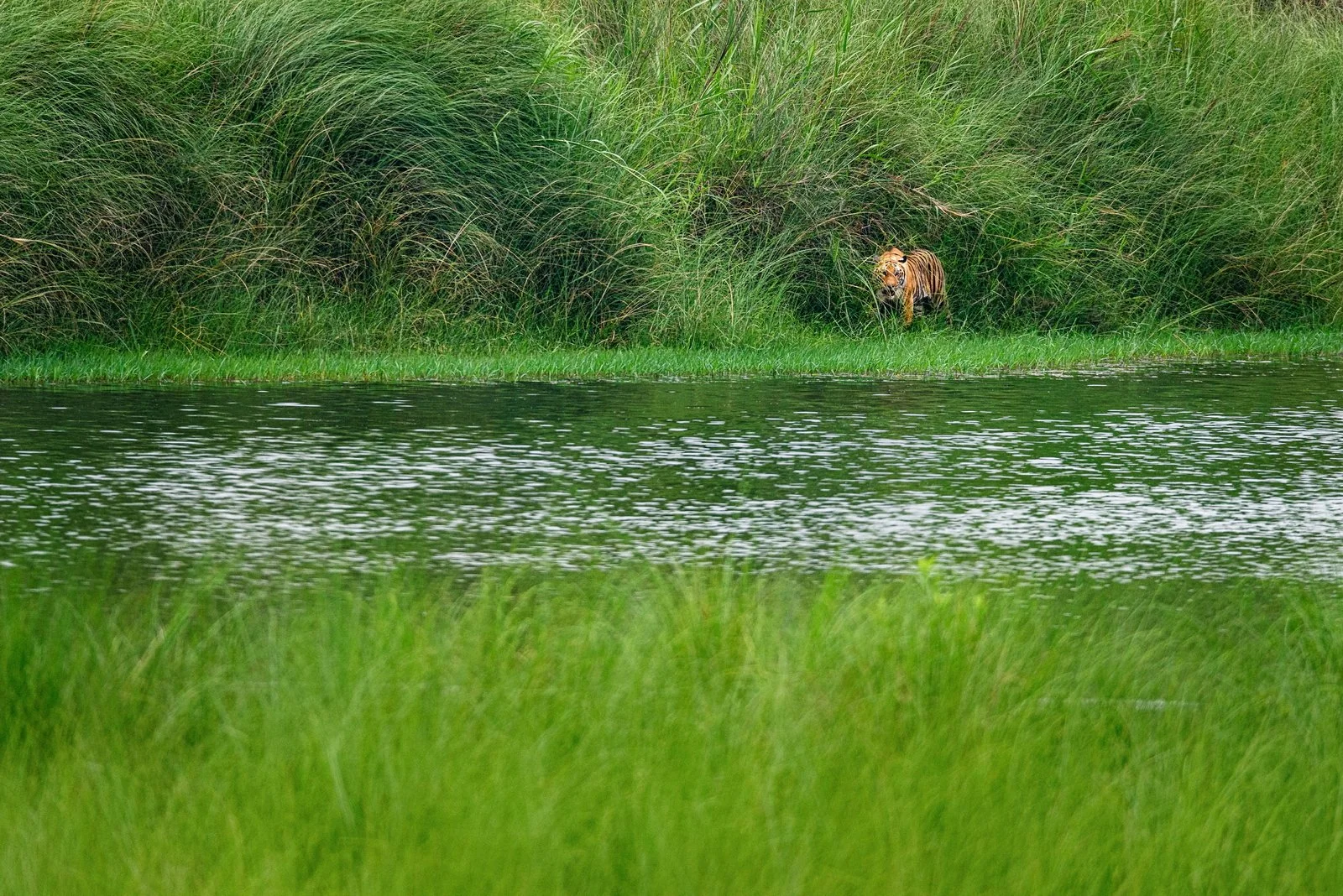
Royal Bengal Tiger emerging from the grassland, for a bath
Every day was the same. We walked in, sat quietly, waited the whole day, and walked back in the evening without seeing a tiger. The forest was alive with birds, deer, and signs of movement, but the tiger remained invisible. On the third day, we spotted a tiger far away, only visible through binoculars. It was too distant to photograph, and I did not even raise my camera.
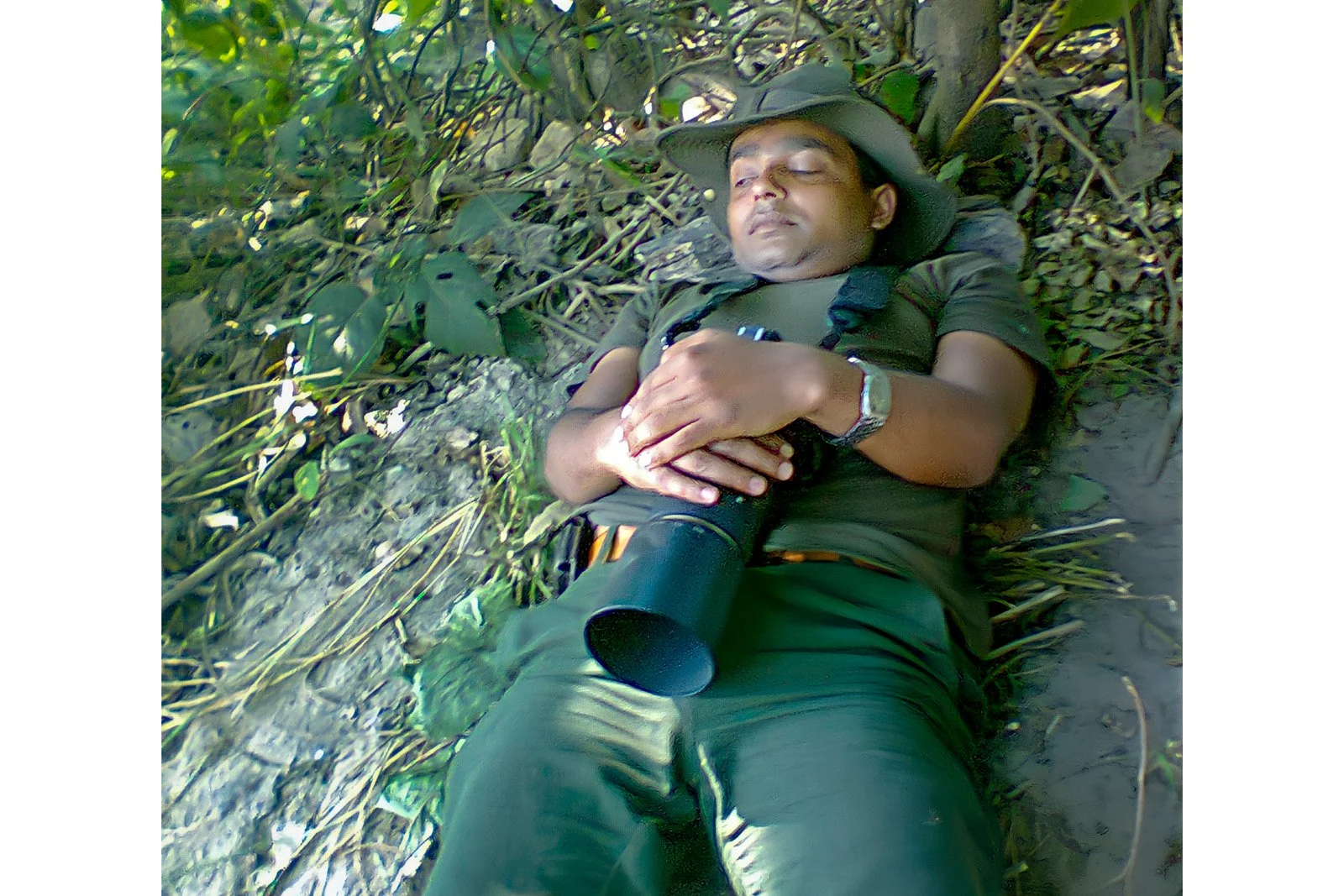
Resting in the shade while waiting for tiger to show up
By the sixth day, the disappointment was visible on the guides’ faces. They were frustrated and felt they had failed in their responsibility. One of them even refused to eat lunch, saying he had not done his job properly. I had to tell him clearly that I did not blame him. Tigers do not follow schedules, and the forest does not guarantee sightings. Only after that did he agree to eat.
That day was extremely hot. The temperature was close to 40°C. We were sitting on the sandy bank of the Karnali River inside the park. A group of about 20 swamp deer were sitting in the shallow water, trying to cool themselves. After lunch, all three of us were feeling tired and sleepy, so I placed my camera down and leaned back to rest.
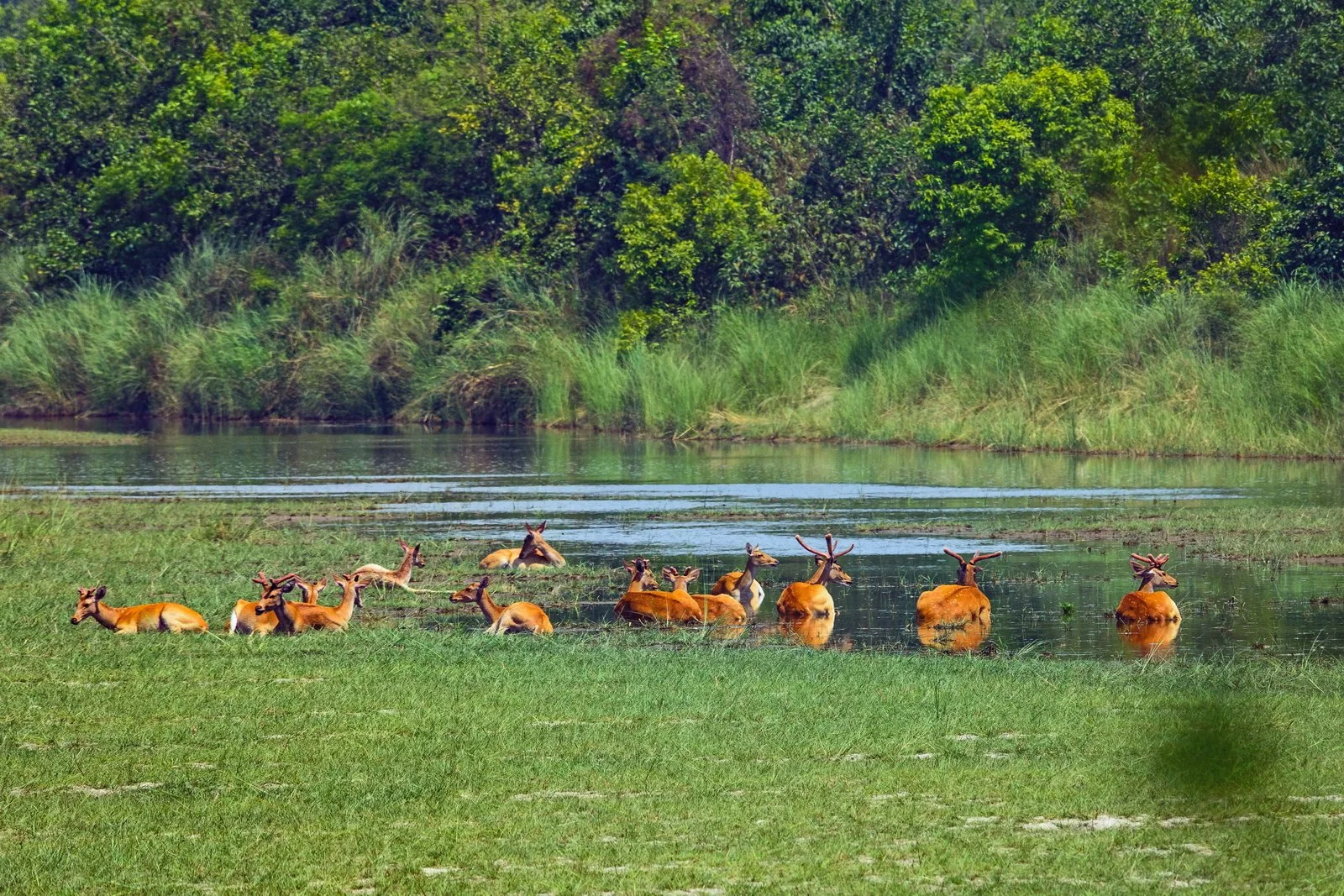
Swamp Deers sitting in river
Then everything changed.
About 50 meters to our right, there was sudden movement in the grass. A female Royal Bengal Tiger sprang out, crossed the river in a single leap, and charged towards the swamp deer. The deer scattered in all directions. It happened in seconds. By the time I realized it was a tiger, she was already chasing one of the deers in my direction.
I grabbed my camera quickly. In that moment, the tiger noticed me. She stopped the chase, turned back, and after taking a few steps, she paused. She looked directly at me. That was when I took a few photographs.
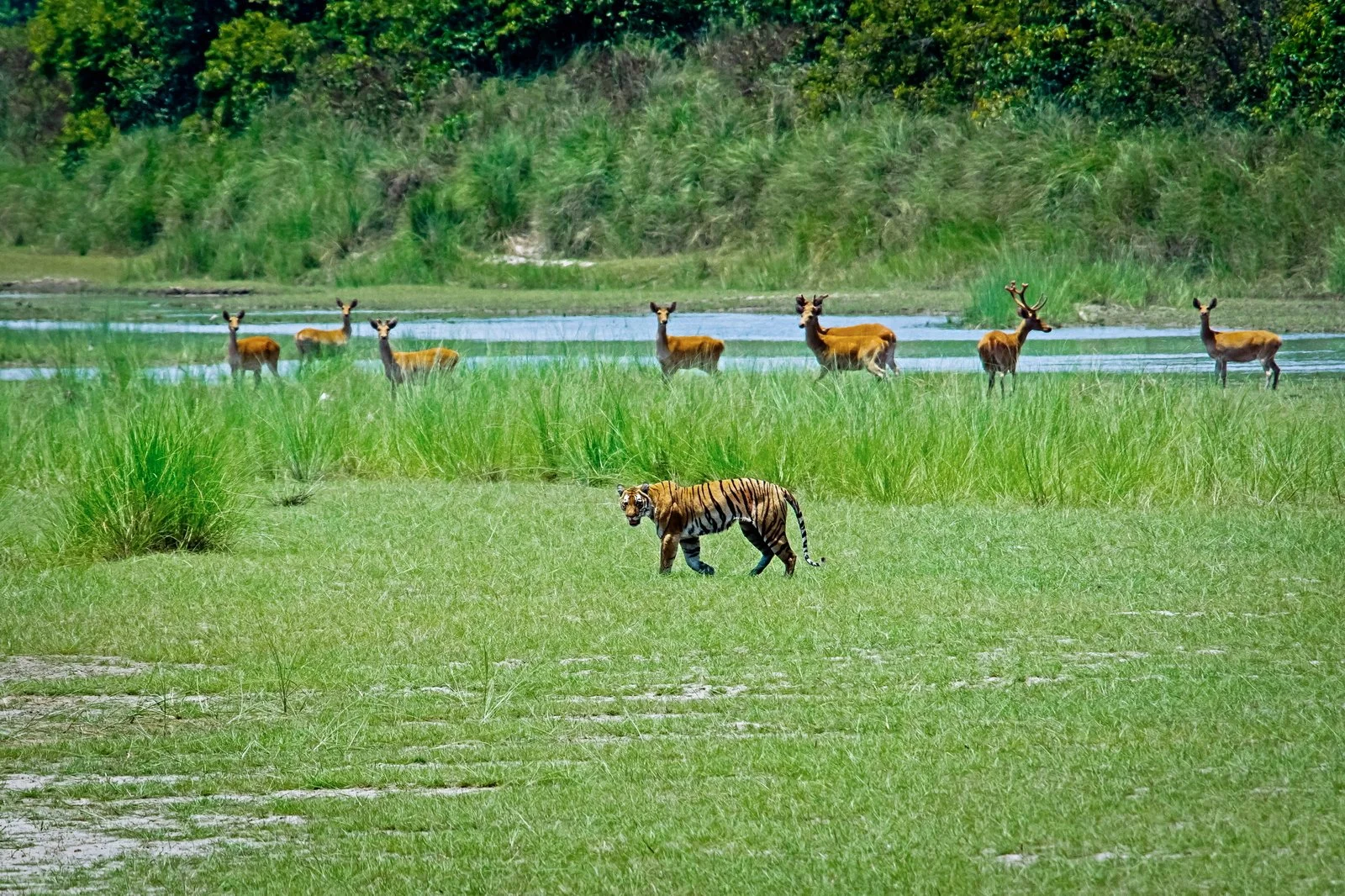
My first Tiger photo with Swamp Deers in the background
Then, she continued on her way and disappeared into the bushes. We all just stood there, me, the guides, and the remaining deers watching her walk away.
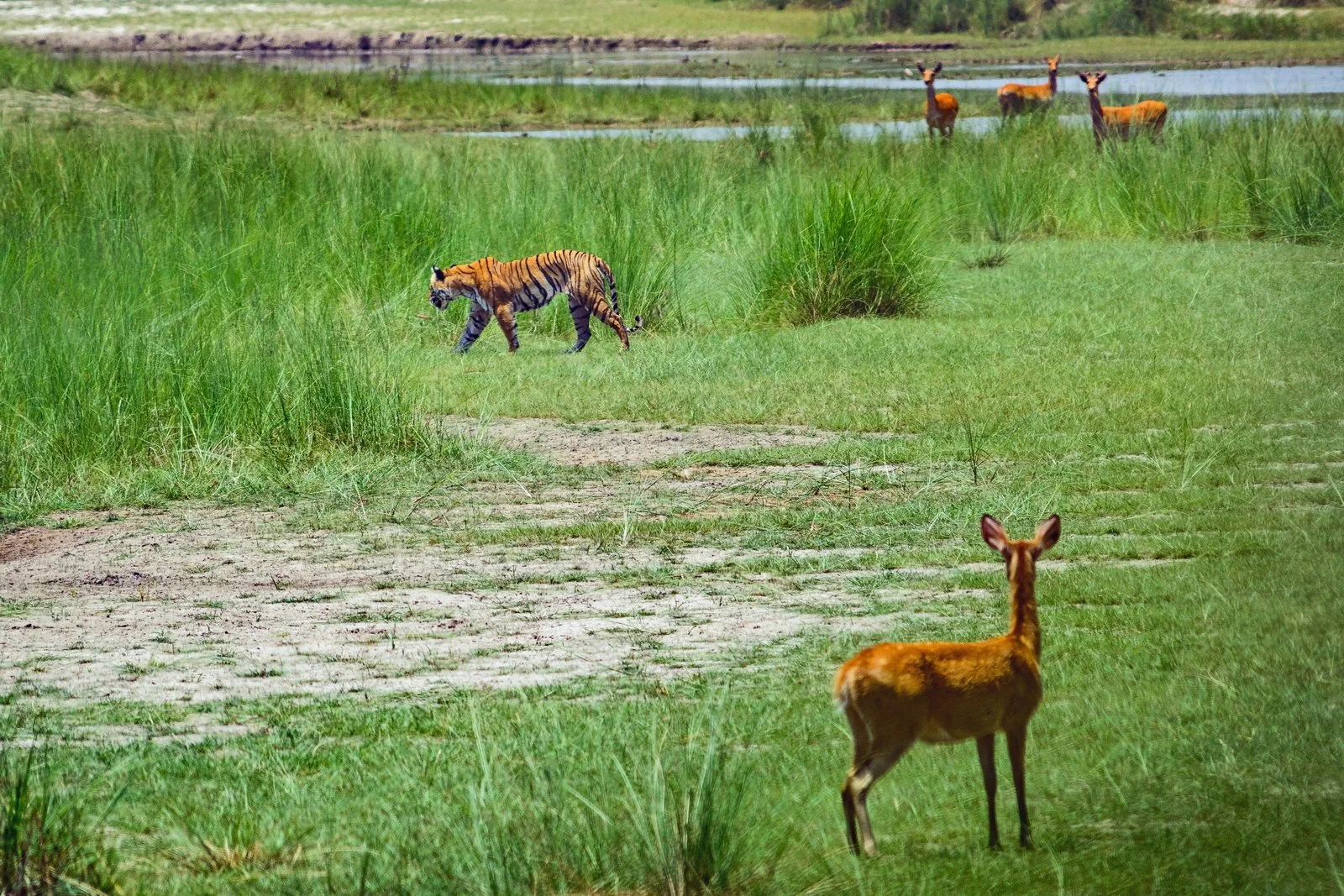
Royal Bengal Tiger walks by as Swamp Deers look on
That was my first photograph of a wild Royal Bengal Tiger.
It did not last long. It was not dramatic. There was no second chance. But it was real, and it was in the forest, on her terms. That moment stayed with me. It reminded me why patience matters in wildlife photography, why respect matters, and why the forest always leads the story.
Today, Nepal’s tiger numbers have increased significantly. In 2023, the count reached 355 tigers, and with the current census ongoing, the number is expected to cross 500. This is a major conservation success. But that moment in Bardia in 2013 will always remain special to me, not because of the photograph alone, but because of what it represented: trust in the process, respect for wildlife, and learning to wait.
That encounter in Bardia shaped the way I approach wildlife photography. It taught me that being in the field is not about chasing images, but about respecting space, behaviour, and boundaries. The tiger did not owe us a sighting. She was not a subject to be pursued, only a presence to be witnessed. Since then, I have carried that lesson into every forest, every park, and every assignment. Ethical wildlife photography begins with patience and restraint. Conservation is not only about protecting numbers, but about respecting individual lives. That first tiger did not just give me a photograph, she taught me how to be in the forest.
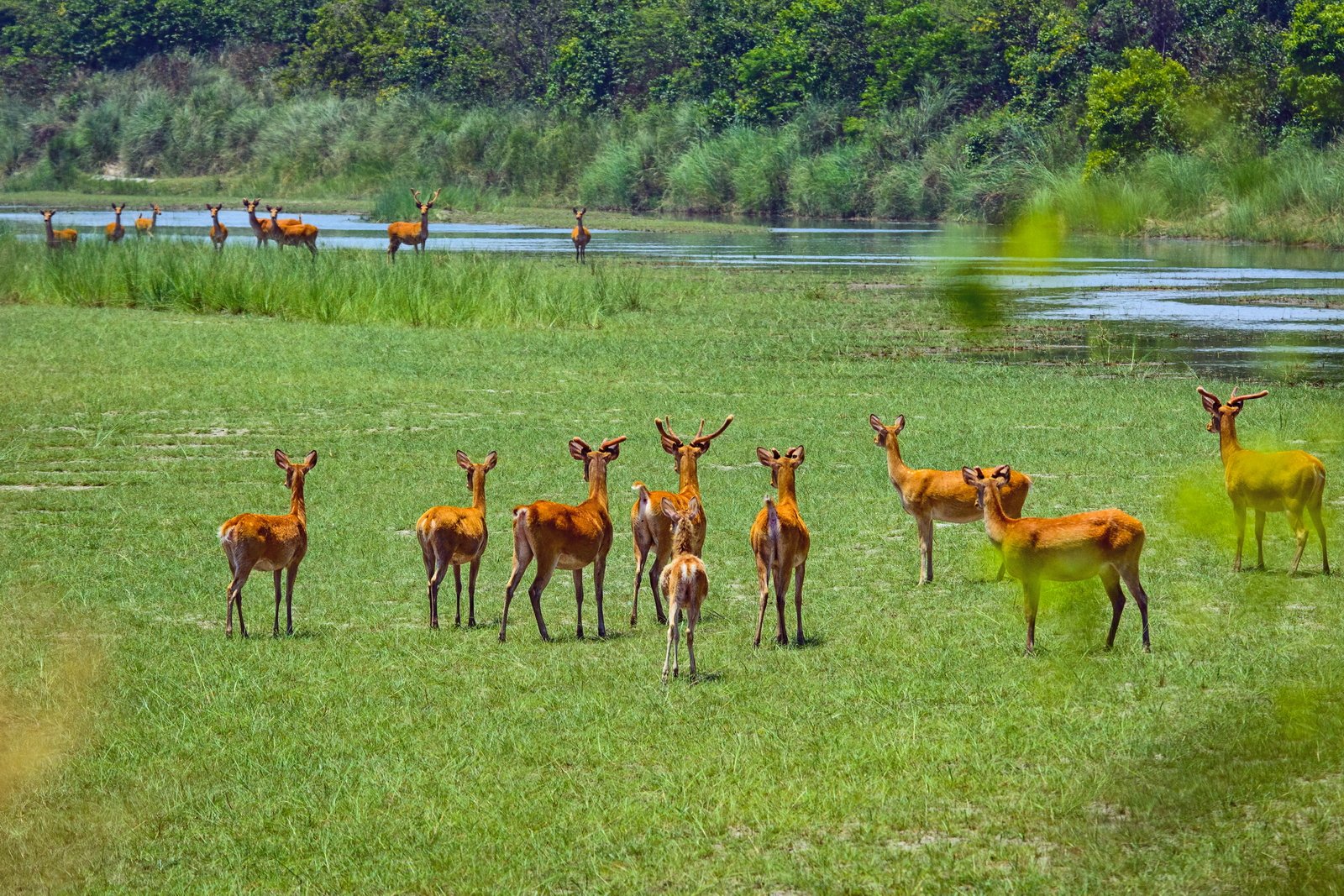
Swamp Deers alert and cautious after the Bengal Tiger walked away
