
Surrounded by Flycatchers: A Lesson in Boundaries
In May 2015, I was in Meghauli, Chitwan on a week-long photography trip, documenting the Asian Paradise Flycatcher.
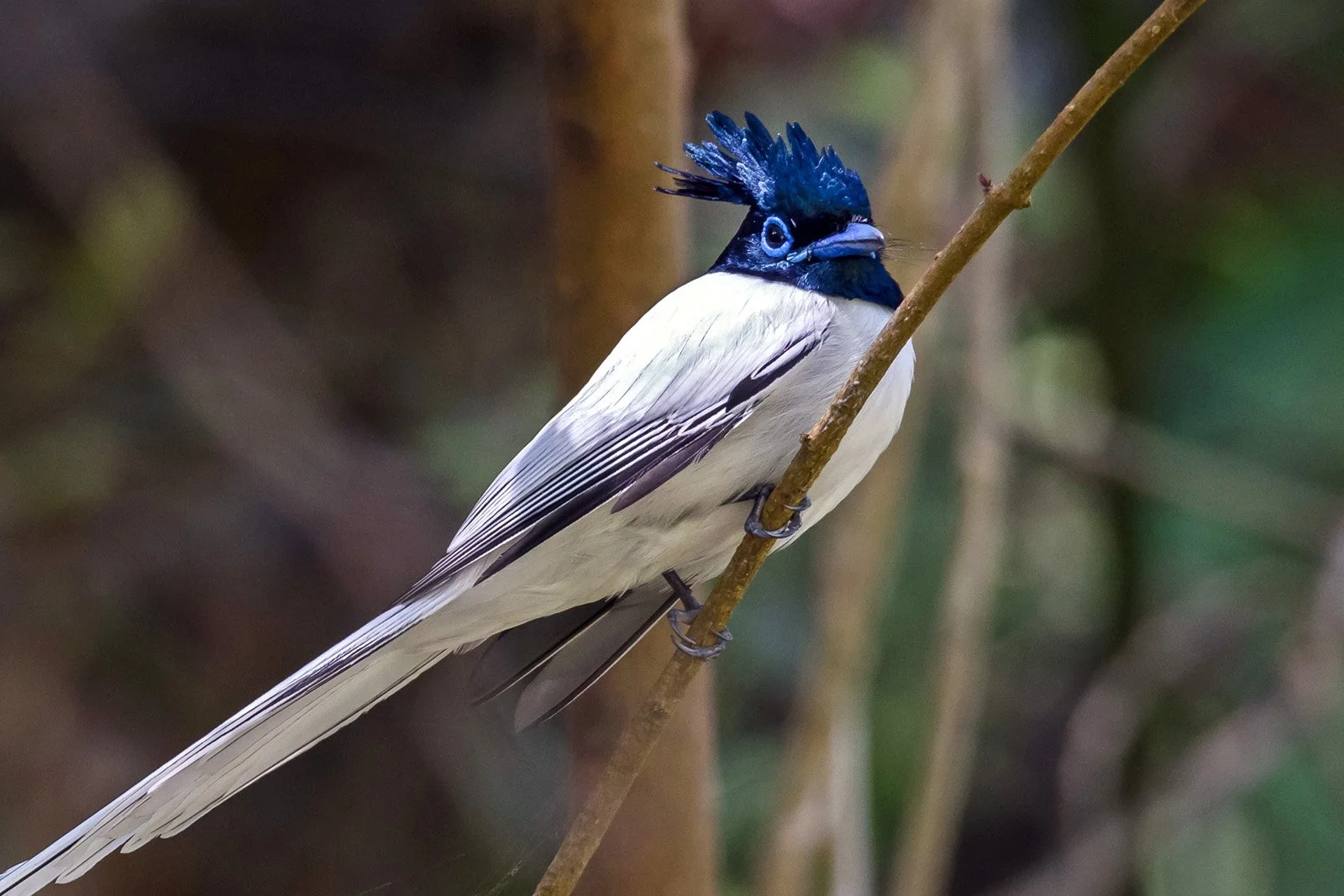
Asian Paradise Flycatcher adult male
I was staying at a resort that had a small freshwater stream running through a patch of forest on its property. That narrow forest corridor, following the stream, was an excellent nesting site for birds.
Along that short stretch, I found nests of Black Drongo, Golden Oriole, Chestnut-bellied Nuthatch, and several Asian Paradise Flycatchers. It was active, alive, and busy from early morning till evening.
When I search for nesting sites, I always pay attention to Black Drongo nests. Drongos are aggressive and very effective at chasing away predators. Because of this, many smaller birds choose to nest close to them, using their presence as a natural security system. That pattern was clearly visible along this stream.
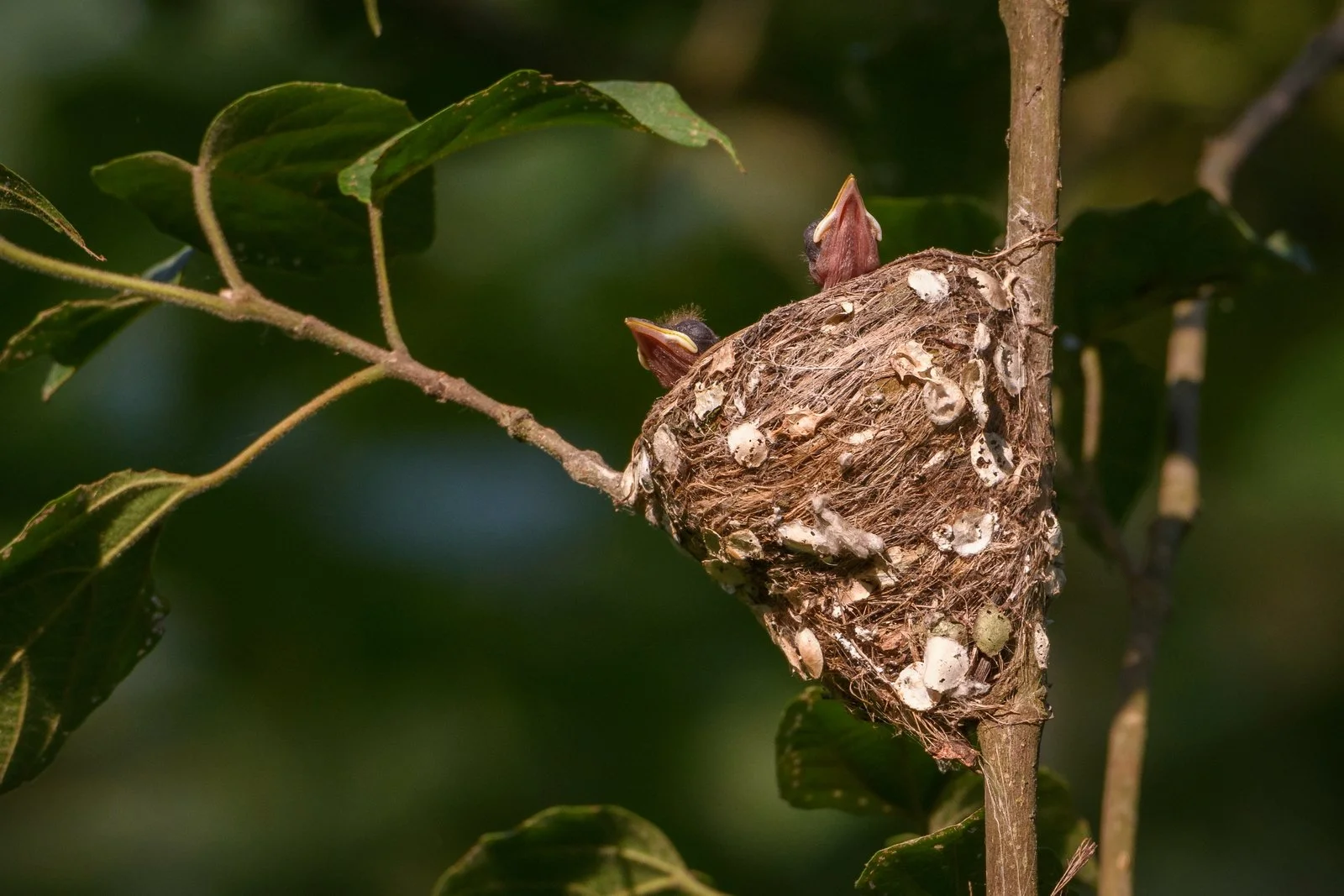
Asian Paradise Flycatcher hatchlings in nest
After observing the area for some time, I selected one Asian Paradise Flycatcher nest to document, I then chose a spot to wait. It was on the opposite side of the stream, under a large tree with thick bushes, a natural place to hide, with enough cover to blend in without getting too close to the nest. My intention was to document their behaviour without disturbing them.
After breakfast, when bird activity is usually high, I set up my camera and hid under a green net at the chosen spot. After about forty minutes, the forest settled around me, and the birds resumed their normal movements. I did not start photographing immediately, I wanted them to be completely comfortable before I did anything. For another fifteen minutes, both the male and female Paradise Flycatchers visited the nest several times with food and fed their chicks. When it seemed the chicks had already been fed well and the activity was steady, I decided to take the shot.
The female arrived with food. I took a few frames in a short burst.
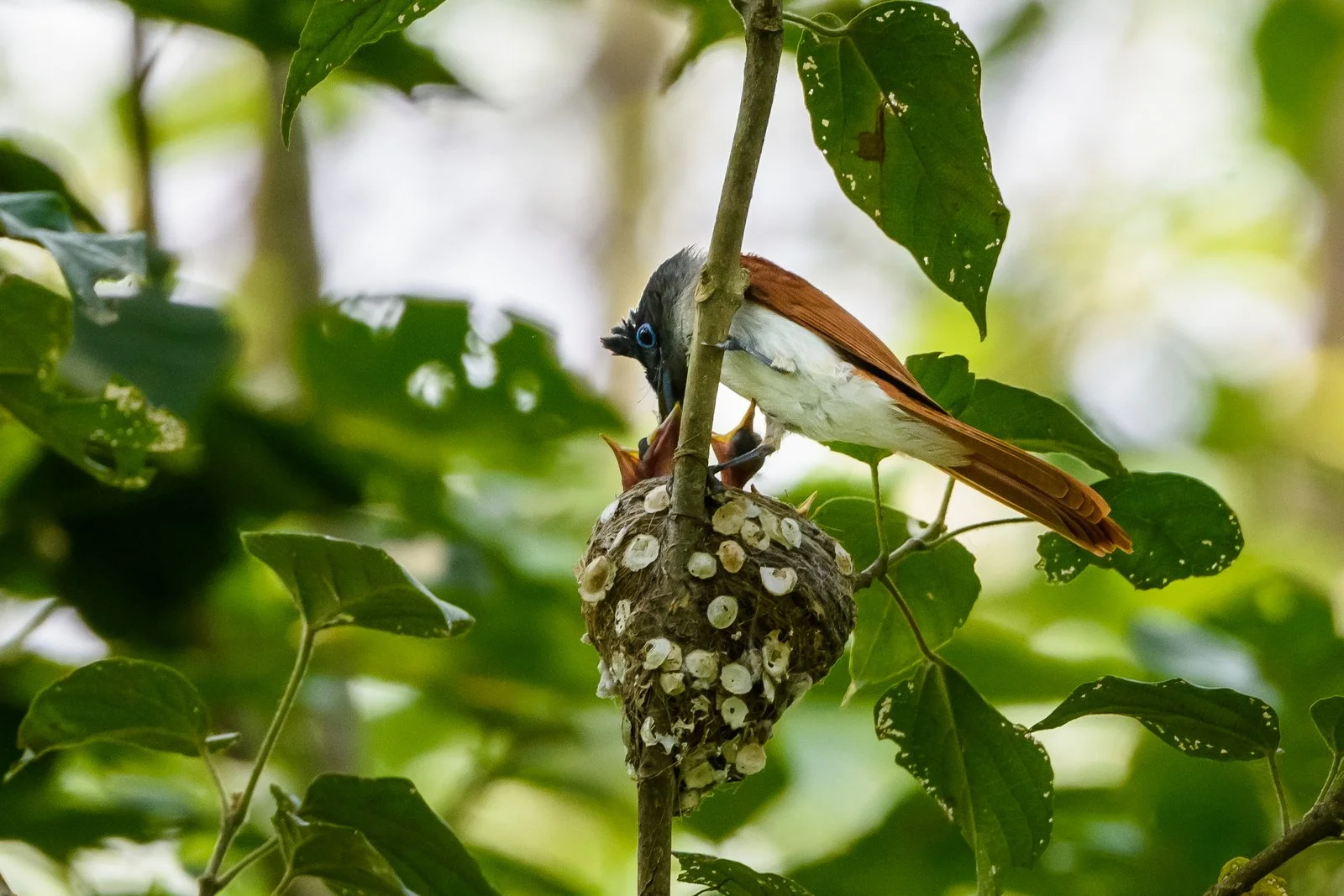
Asian Paradise Flycatcher female, feeding her babies
As expected, she heard the sound of the camera. She stopped and looked in my direction. She stayed alert, watching, trying to understand what the unfamiliar sound was. Then she saw me.
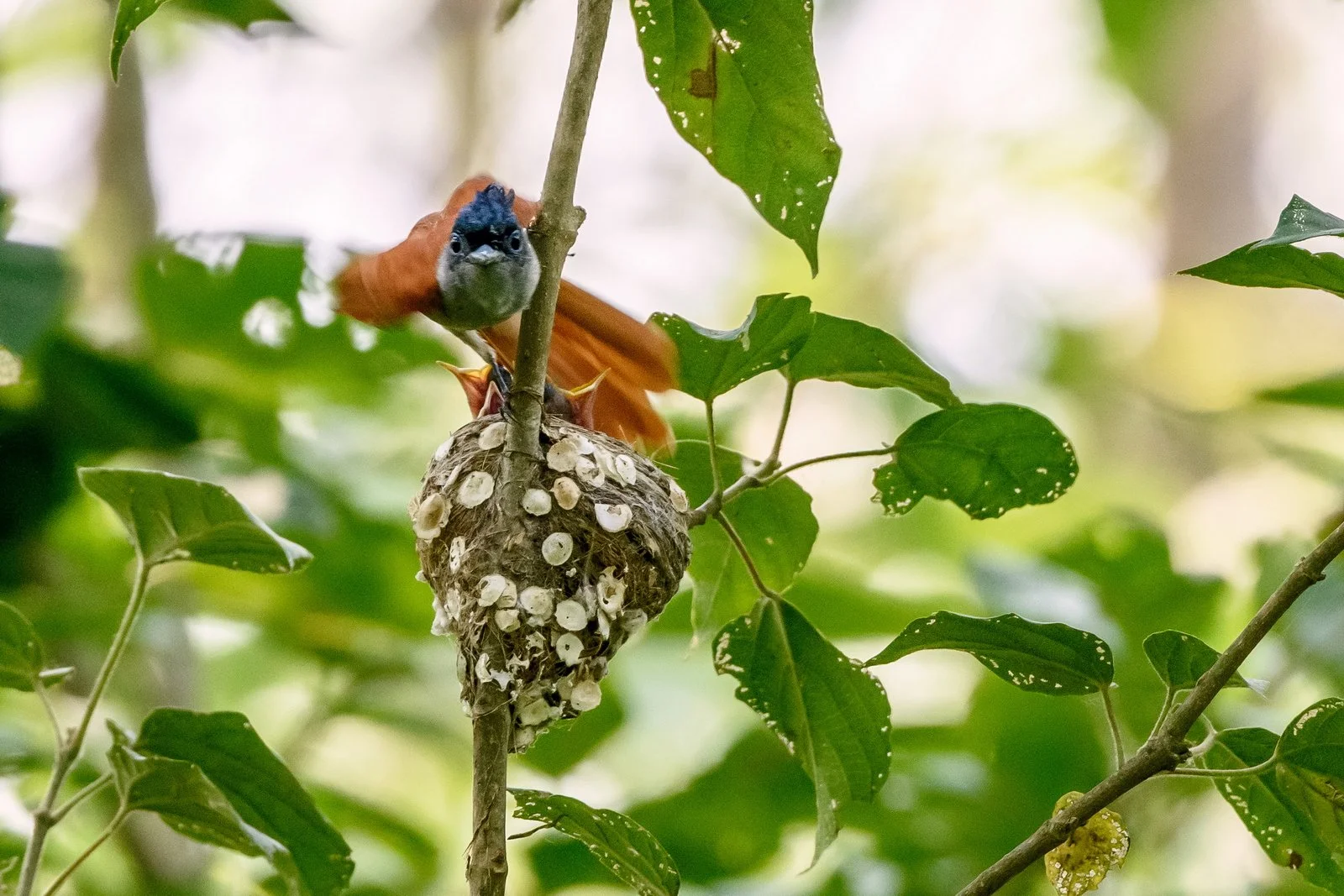
Asian Paradise Flycatcher female, trying to find the source of noise
She called out.
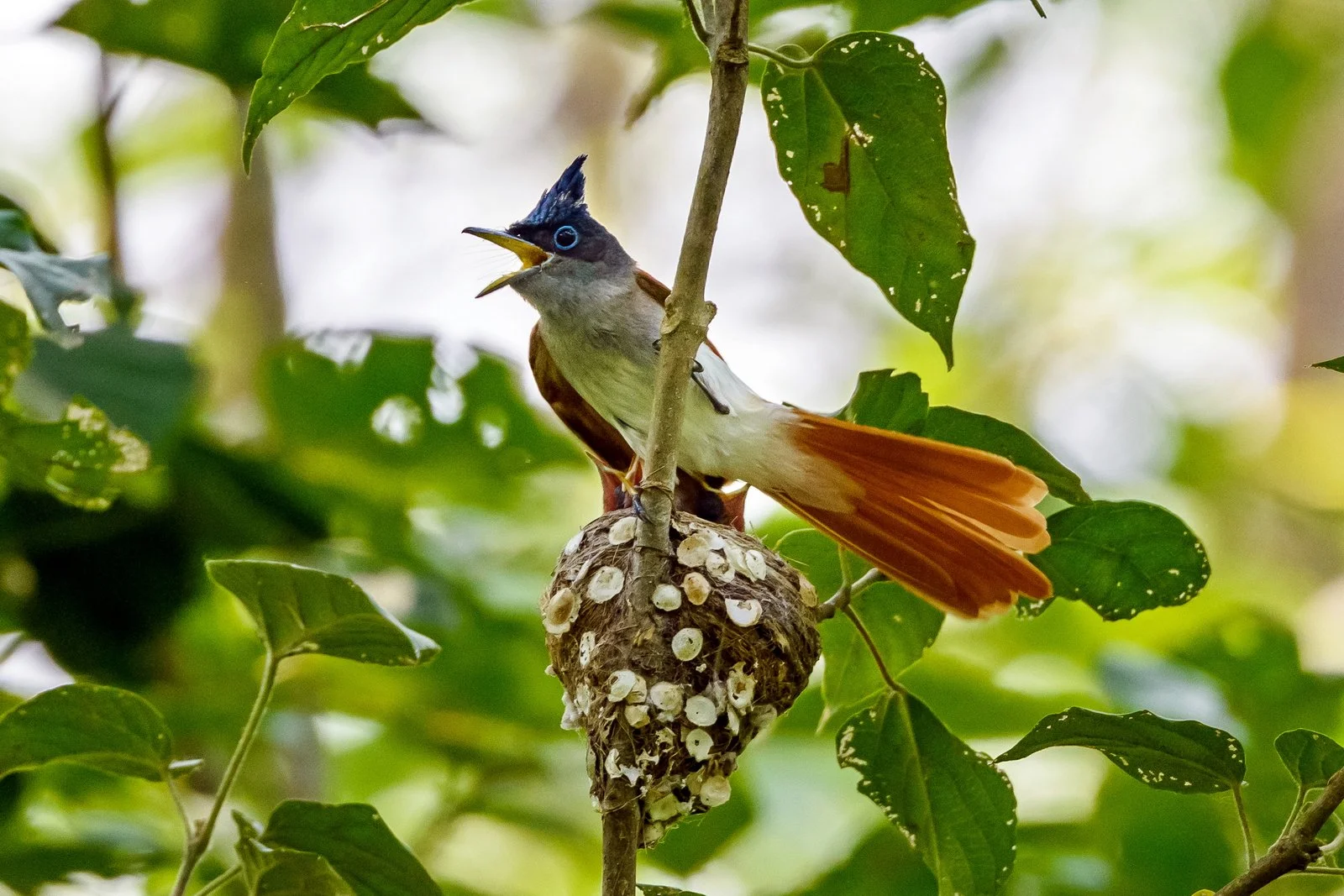
Asian Paradise Flycatcher female calling
Within moments, I was surrounded by five adult Asian Paradise Flycatchers, perched on nearby branches and bushes. They were very close, too close to photograph. They were calling loudly, clearly alarmed and defensive. It was not aggression, it was protection.
That was enough for me.
I stopped immediately and slowly backed away. I did not want to push the situation further. The nest, the chicks, and the adults were more important than any photograph. I left the area quietly and gave them space.
I still tell this story to my friends and students: how I was chased away by five small birds. We laugh about it. But the lesson is serious.
Wildlife does not always flee. Sometimes it stands its ground. Sometimes it defends. And when that happens, it is a clear signal.
I did get some good photographs that day. But more importantly, I did not cross a line.
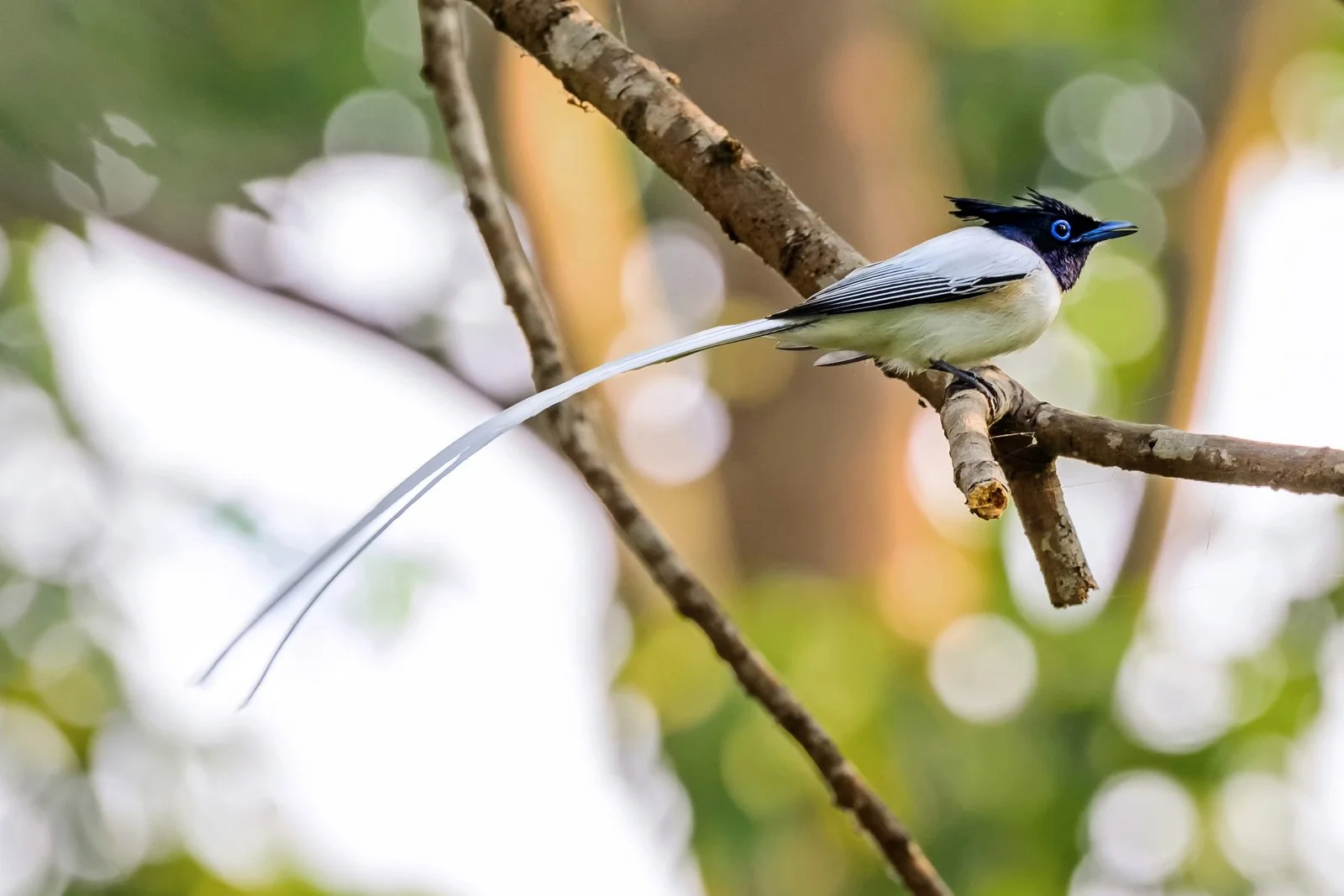
Asian Paradise Flycatcher male (white morph)
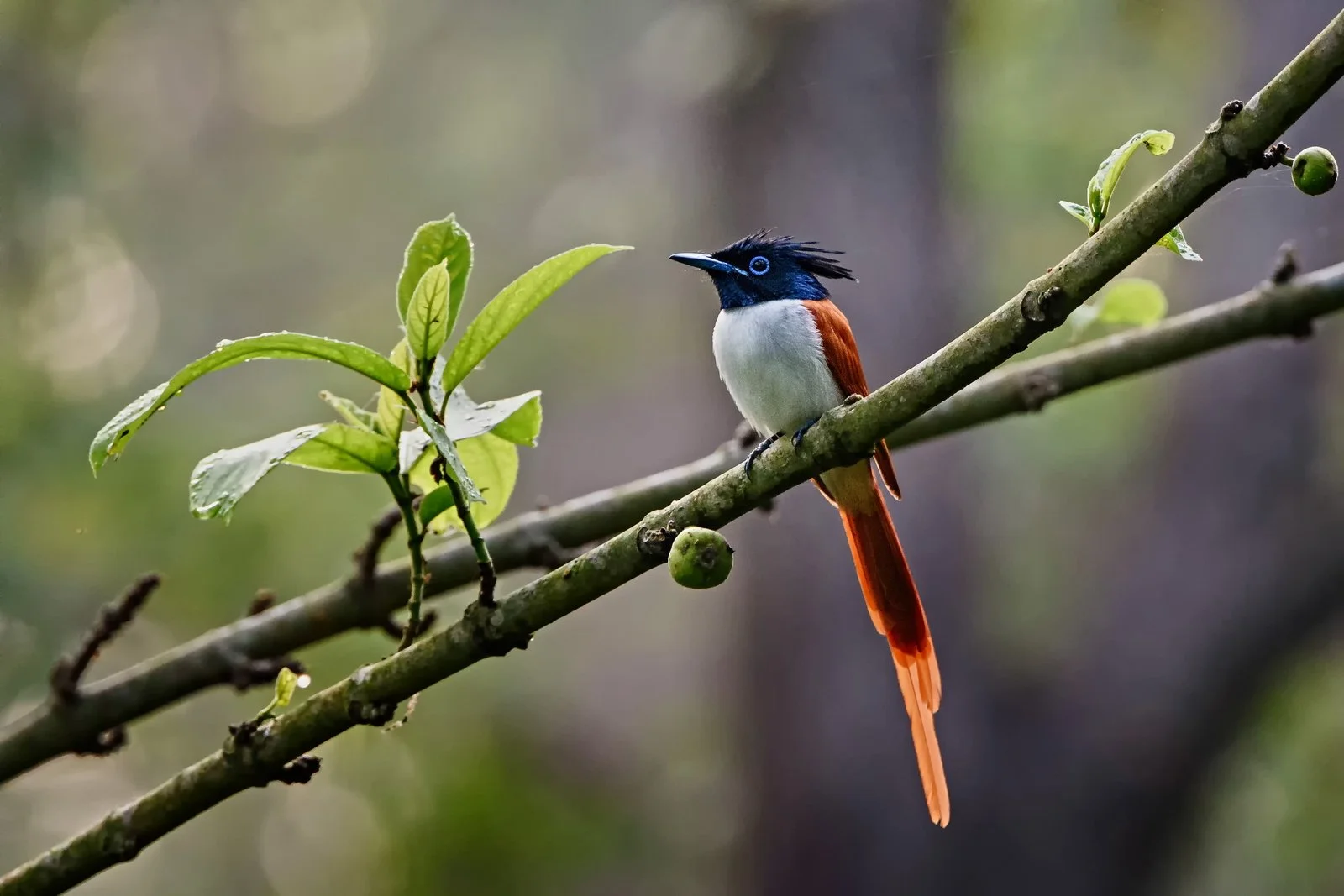
Asian Paradise Flycatcher male (rufous morph)
In the field, ethics is not about how close you can get. It is about knowing when you are close enough.
That moment in Meghauli reinforced something I strongly believe: conservation is not only about protecting species, but about protecting behaviour, space, and natural processes. Nesting is one of the most sensitive periods in a bird’s life, and even small disturbances can have lasting effects. As photographers, we are visitors in their world. Our responsibility is not to test their tolerance, but to respect their limits. If an animal has to change its behaviour because of our presence, then we are already too close. Ethical field practice is quiet, patient, and often invisible. That is how wildlife should be documented.
