

Peacock Behavior Study in Nepal
Observing Courtship, Nesting, and Adaptation of Indian Peafowls
Few birds capture human imagination like the Indian peafowl (Pavo cristatus), with its dazzling plumage and rhythmic display. Yet beyond its beauty lies a fascinating story of adaptation and resilience. Through this long-term behavioral study, Om Prakash Yadav documents the daily lives of peafowls across Nepal’s Terai and mid-hill regions, exploring how these iconic birds interact with their environment and with people.
Yadav’s fieldwork focuses on courtship rituals, nesting behavior, and seasonal activity patterns of wild peafowls inhabiting forest edges, farmlands, and buffer zones adjoining national parks such as Chitwan and Bardia. His photographs chronicle the full cycle of behavior — males fanning their iridescent tails in open clearings, females selecting nesting sites near grass cover, and chicks following adults through harvested fields. Each frame reveals subtle elements of peafowl communication and social hierarchy that often go unnoticed in casual observation.
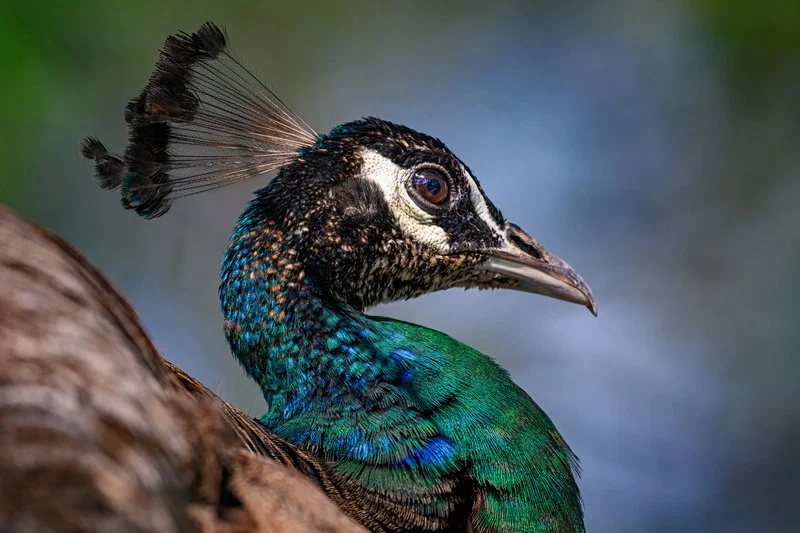
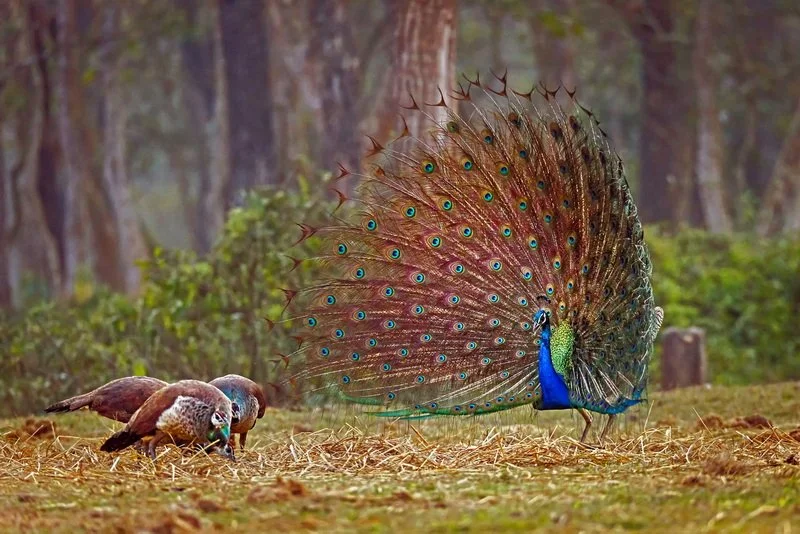
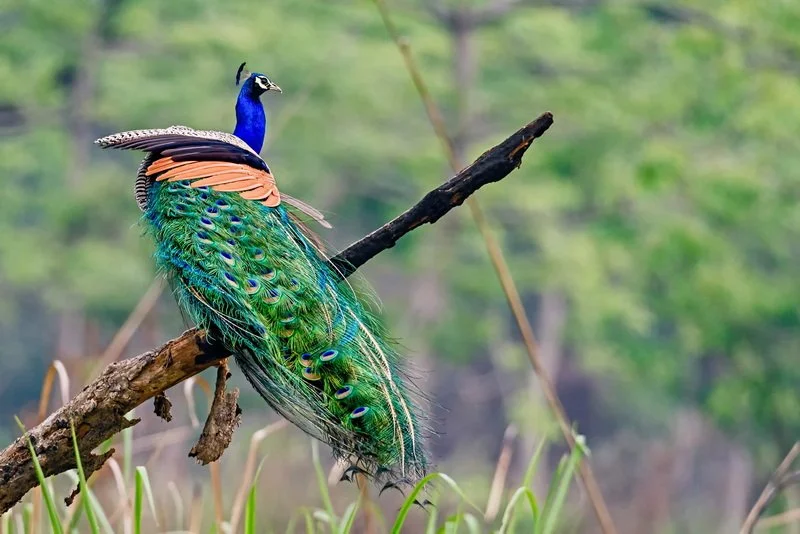
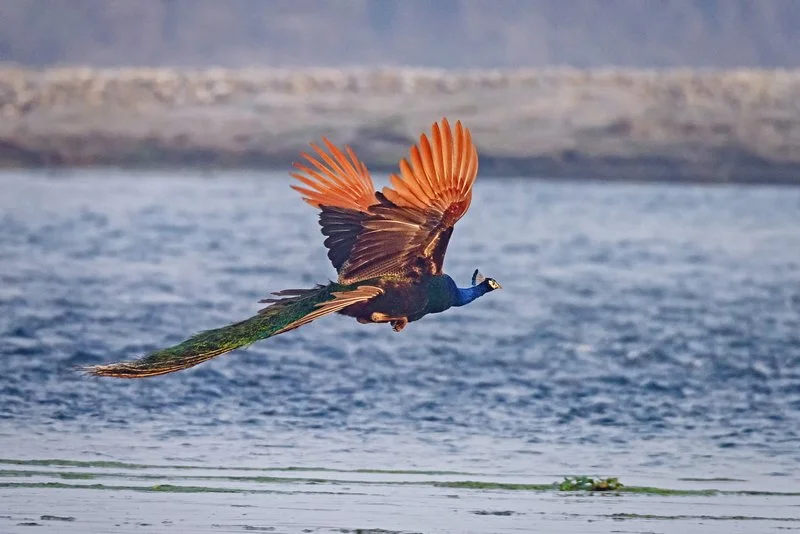
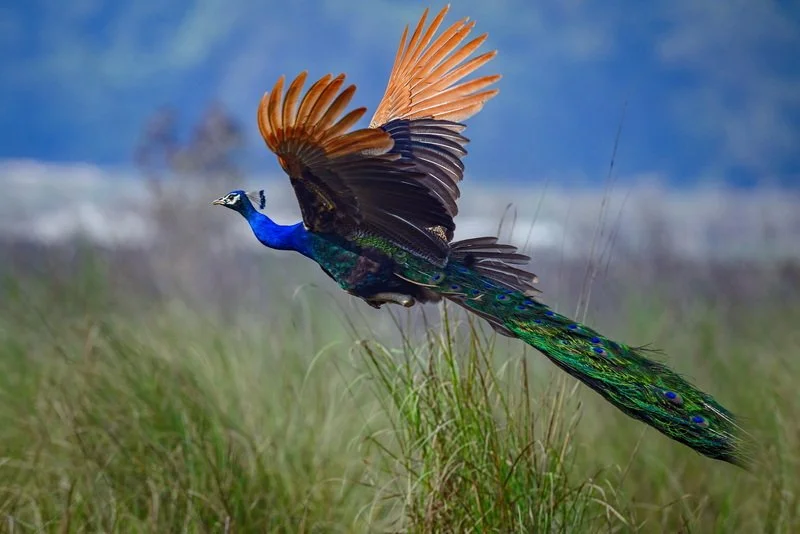

This photographic project bridges art and field science, providing visual material useful for ornithologists, educators, and wildlife enthusiasts. It contributes to understanding how peafowls adapt to human-modified landscapes — sharing habitats with livestock, feeding in agricultural areas, and adjusting their breeding calendar to seasonal crop cycles. Such observations highlight the species’ flexibility and the growing importance of community-managed habitats in sustaining biodiversity outside protected areas.
While peafowls are not currently endangered, their local populations face increasing pressure from habitat loss, pesticide use, and illegal hunting for feathers. Yadav’s documentation aims to raise awareness about these threats and to promote coexistence practices that benefit both farmers and wildlife. His photographs have been used in conservation outreach materials and educational exhibitions emphasizing the ecological roles of birds as natural pest controllers and seed dispersers.
The Peacock Behavior Study also explores cultural connections. In Nepalese and South Asian traditions, the peacock symbolizes rain, fertility, and protection. By contextualizing these cultural meanings within scientific observation, the project builds a bridge between heritage and modern conservation thinking. Through his lens, Yadav invites viewers to see the peacock not only as a symbol of grace but as a living participant in dynamic ecosystems.
Technically, the series relies on ethical bird photography practices — using natural light, long focal lengths, and minimal intrusion. Field sessions often begin before sunrise to capture display behavior during the quiet hours of dawn. The resulting images combine aesthetic appeal with accurate behavioral representation, making them valuable for educational resources and avian research documentation.
Through this work, Om Prakash Yadav underscores how observing and photographing common species can deepen ecological understanding. The Indian peafowl serves as a visual ambassador for broader conservation awareness — reminding us that protecting familiar birds is as vital as safeguarding rare ones.
View the complete peacock behavior portfolio and learn how visual studies of common species contribute to avian research, education, and conservation communication.