
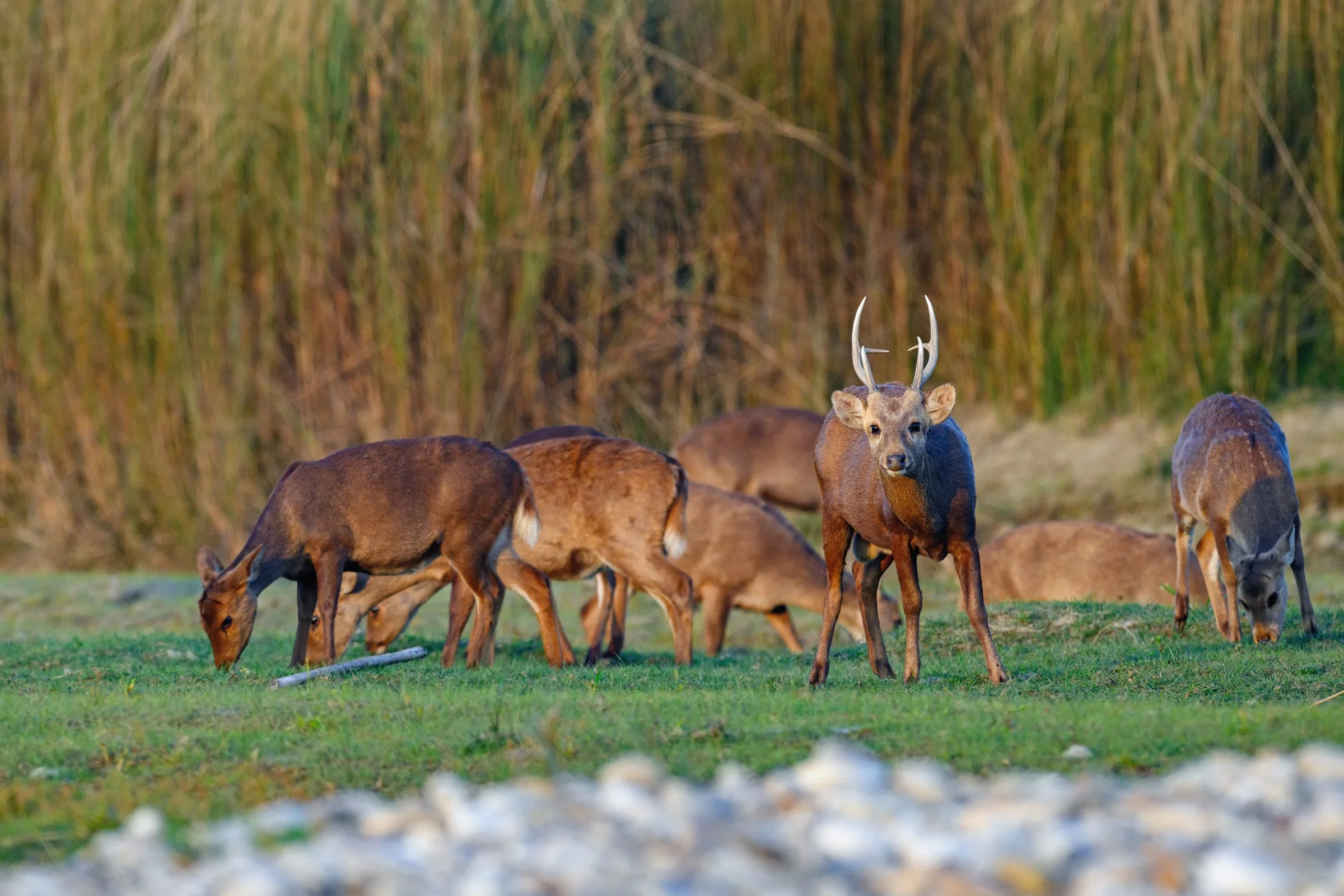
Hog Deer Status Monitoring in Nepal
Understanding the Decline and Conservation Needs of a Lesser-Known Species
Hidden among the tall riverine grasses of Nepal’s Terai lives one of the country’s least-seen mammals — the hog deer (Axis porcinus). Smaller than spotted deer and far more secretive, the species has long escaped public attention, yet it plays a crucial role in the ecological balance of lowland forests. Its presence signals the health of floodplain habitats that also support rhinos, elephants, and tigers.
Through years of photo-documentation and field collaboration, Om Prakash Yadav has contributed to monitoring the distribution and population status of hog deer in Chitwan National Park and adjoining buffer zones. His photographs, taken during early-morning surveys and grassland burns, record vital aspects of behavior — feeding, rutting, and seasonal movements — that help researchers assess population trends and habitat conditions.
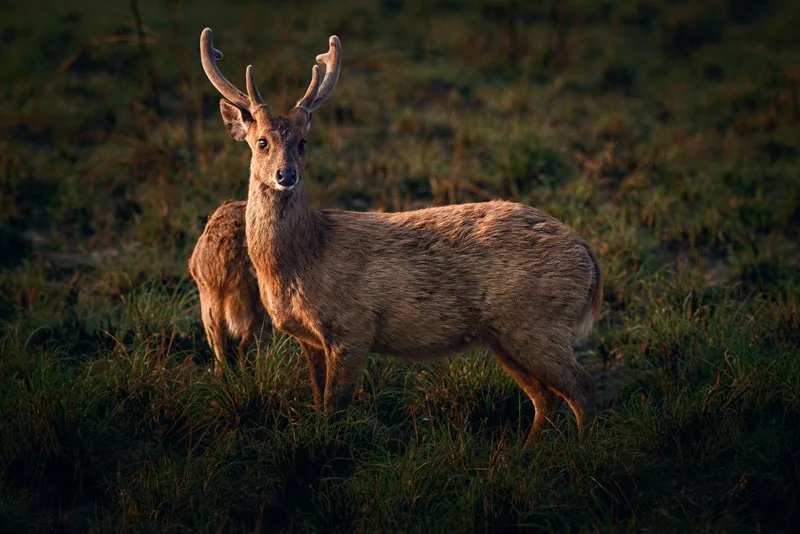
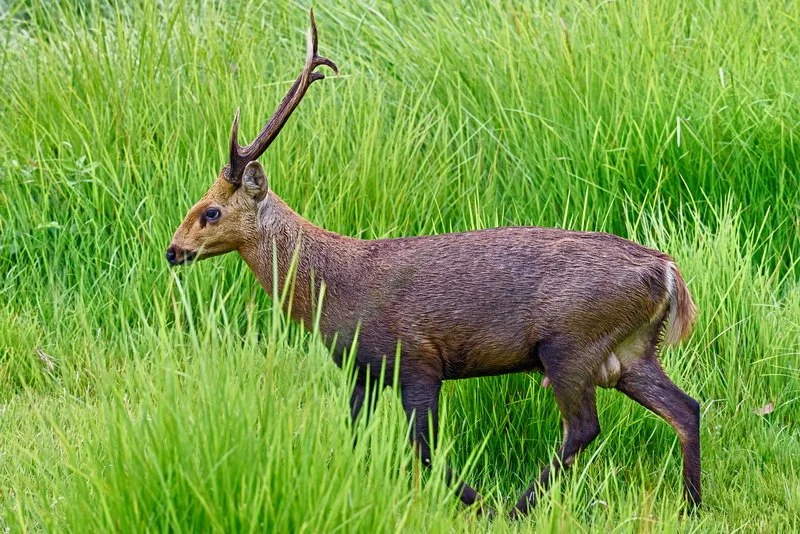
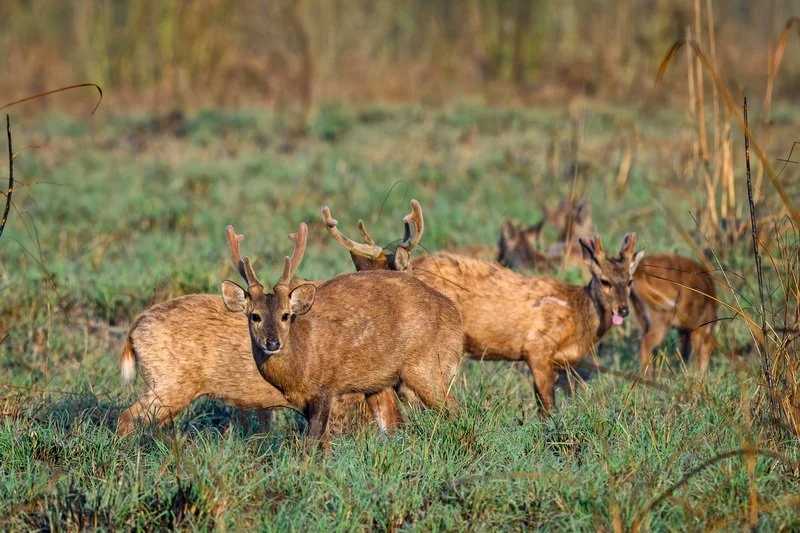
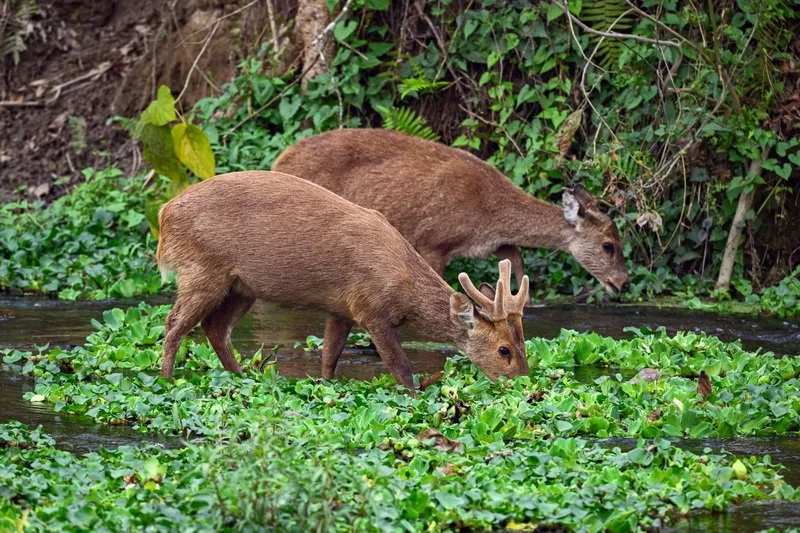
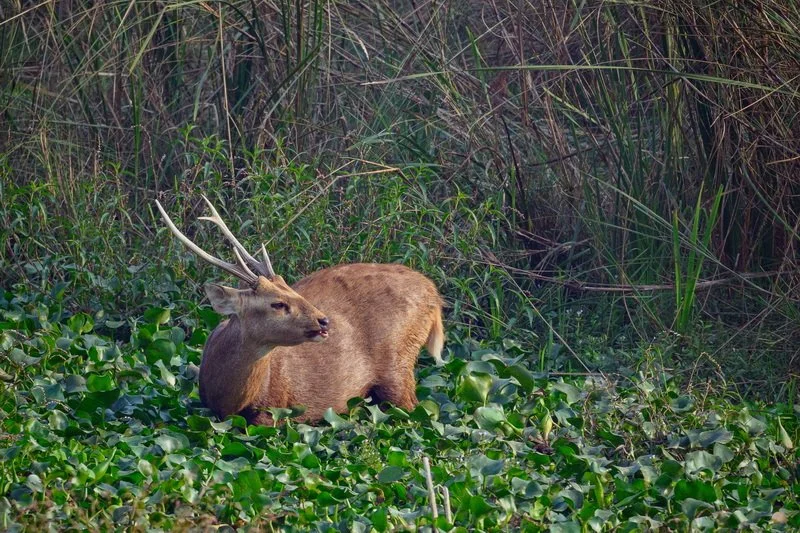
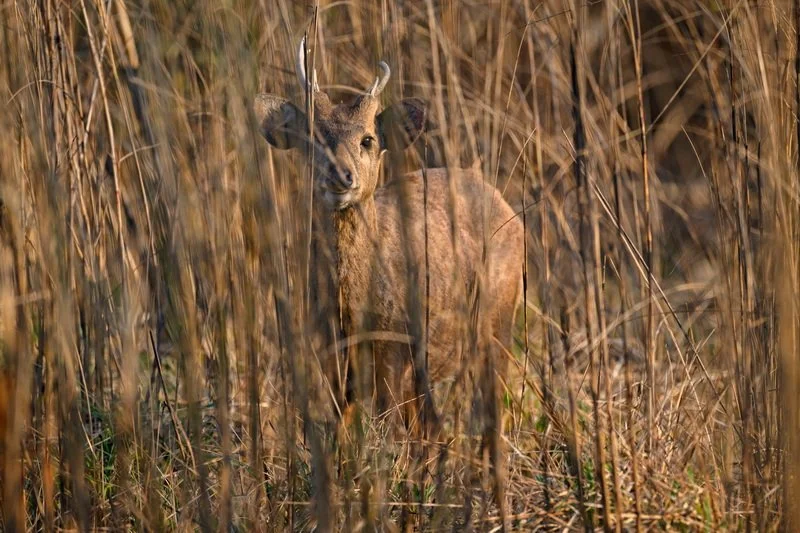
The project supports national efforts to update hog deer population estimates under the guidance of the Department of National Parks and Wildlife Conservation (DNPWC) and local research partners. Yadav’s imagery aids in mapping sighting locations, identifying threats, and illustrating how changes in vegetation structure affect deer abundance. The photographs also document human dimensions — community grass cutting, livestock grazing, and land-use conversion — showing how resource dependency influences wildlife survival.
Hog deer populations have declined across South Asia due to habitat loss, invasive species, and fragmentation of riverine corridors. In Nepal, isolated herds remain in Chitwan, Bardia, and Shuklaphanta. Yadav’s work visually communicates these challenges, portraying the disappearing tall-grass habitats that once stretched unbroken along the Rapti and Narayani floodplains. His field notes and imagery have been used in awareness campaigns encouraging sustainable grassland management and controlled burning practices that benefit both wildlife and local livelihoods.
Technically and ethically, each photograph is created with minimal disturbance — using telephoto lenses, silent observation, and strict adherence to park regulations. The focus is on authenticity and accuracy, ensuring that the documentation serves both educational and research purposes. The imagery highlights the species’ physical features — the low-slung body, short legs, and golden-brown coat that allow it to move swiftly through dense cover — while situating it within the dynamic landscapes of Nepal’s Terai Arc.
By presenting the hog deer not merely as a subject of photography but as an indicator of grassland ecosystem health, Om Prakash Yadav brings attention to the importance of small and often overlooked species in conservation planning. Protecting hog deer means maintaining the complex mosaic of habitats that sustain numerous other species and local communities.
Explore the full hog deer monitoring portfolio and discover how research-based photography supports conservation science and policy in Nepal’s protected areas.