
Training the Frontline: Working with Wildlife Guides Across Nepal
When Nepal Tourism Board and UNDP Sustainable Tourism Project approached me for a nationwide wildlife photography training program for wildlife guides, I felt both honoured and responsible. They told me I had been highly recommended as “the best photography instructor in Nepal,” and while the words were humbling, they also set a very high standard. I knew this was not just another training assignment, it was an opportunity to support the people who work closest to wildlife every day, and to contribute to conservation through better visual understanding.
The training program took me across the country, from the far eastern wetlands of Koshi Tappu to the western grasslands of Shuklaphanta, through the forests of Chitwan. At each location, I worked with wildlife guides who spend their lives in the field, often with deep knowledge of animals but limited formal training in photography.
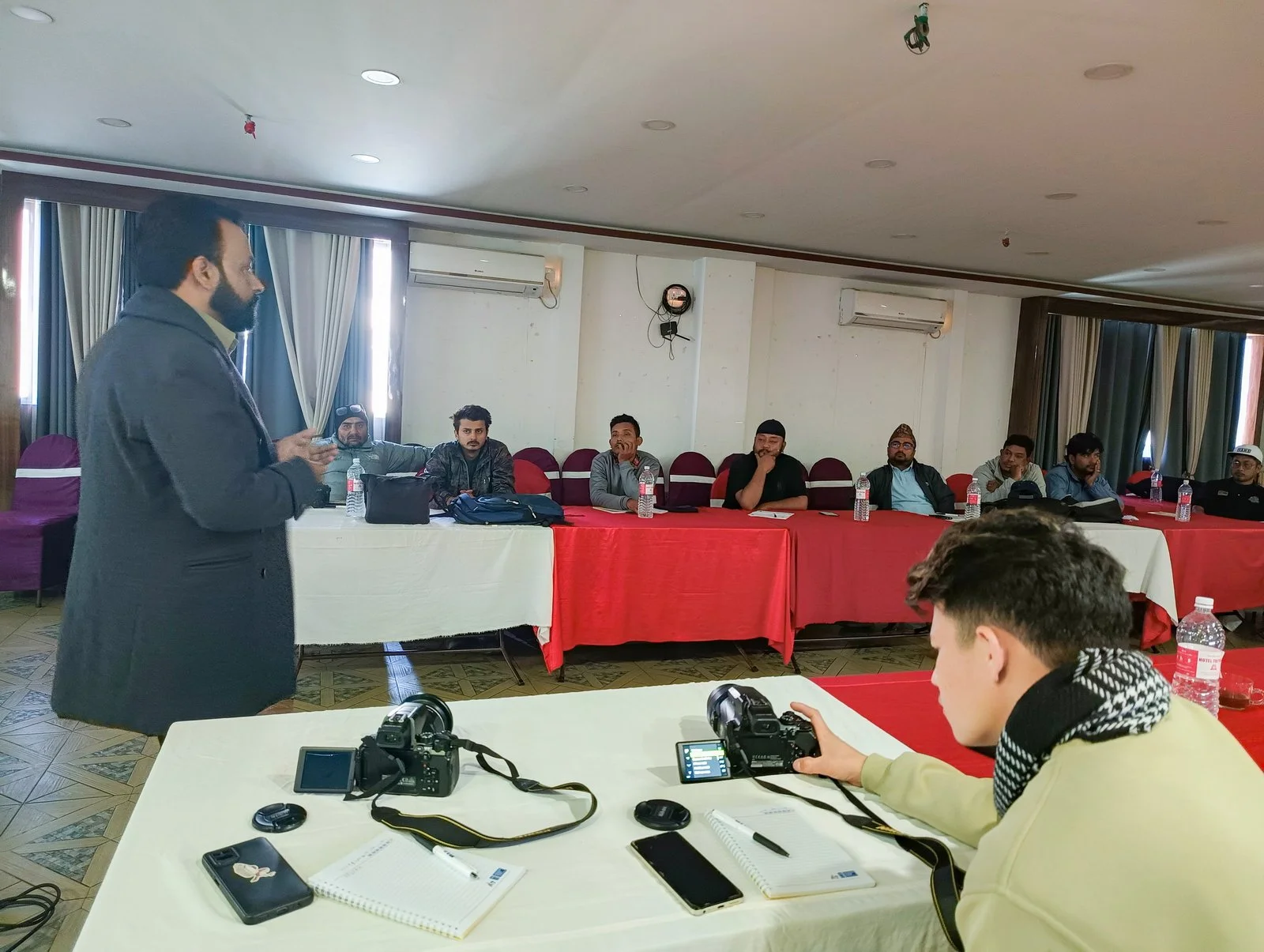
Training for wildlife guides from Koshi Tappu Wildlife Reserve
What struck me immediately was their eagerness to learn. Every group was curious, engaged, and full of questions. They wanted to understand composition, light, behaviour, and timing. Teaching is always more rewarding when the students are genuinely interested, and these guides were exactly that. They were not there just to complete a program. They wanted to improve.
I began every session with the same statement:
“Learning how to operate your camera is one thing. I do not teach that. Learning how to take a good, impactful photograph is what I teach. That is what learning photography is about.”
At first, this surprised many of them. Then it made them smile. They realised the training was not about buttons and settings. It was about seeing, observing, and telling stories through images. From that point, the energy in the room always changed. The focus shifted from equipment to understanding wildlife and behaviour.
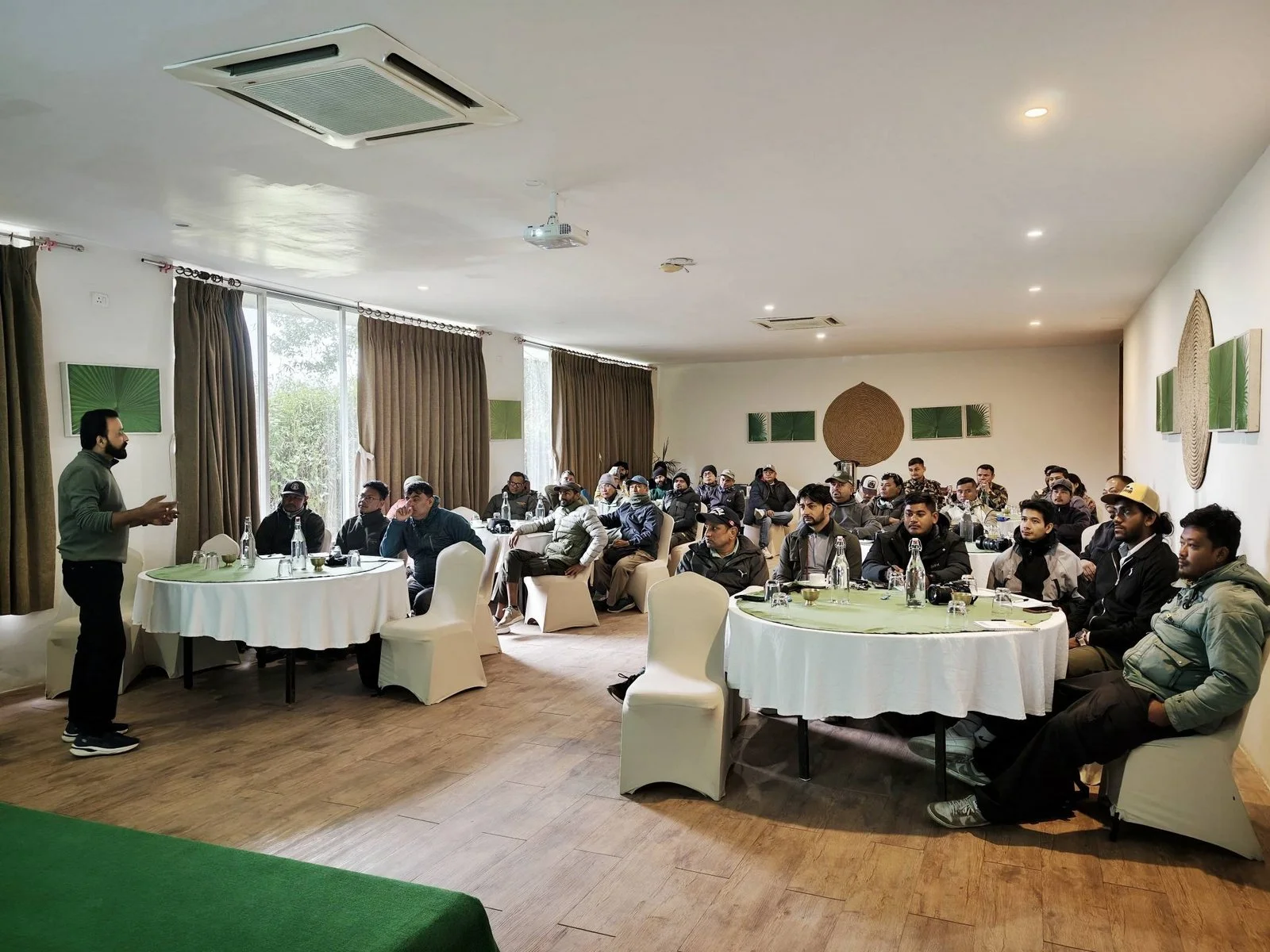
Training for wildlife guides from Meghauli, Kasara, Ghatgain in Chitwan
The content was similar everywhere, but the emphasis changed with location.
In Koshi Tappu, the sessions naturally leaned towards birds and wetland species.
In Chitwan, the focus was strongly on one-horned rhinoceros and forest mammals.
In Bardia, everyone wanted to talk about tigers.
In Shuklaphanta, tigers, grassland species and herd behaviour took centre stage.
That variation kept each training fresh and relevant. It also reminded me how diverse Nepal’s wildlife landscapes are, and how important it is for guides to document what they work with every day.
By the end of each training, I noticed the same two things everywhere. First, the participants felt confident that they would start taking better photographs immediately. Second, they all asked for longer and more detailed workshops in the future. For a trainer, that is the best feedback possible.
Not everything went smoothly, of course. In Shuklaphanta, the power went out towards the end of the session. The projector stopped. The room went quiet. So I turned my laptop around and continued the session with everyone leaning in. It was simple, informal, and effective. We finished the training that way.
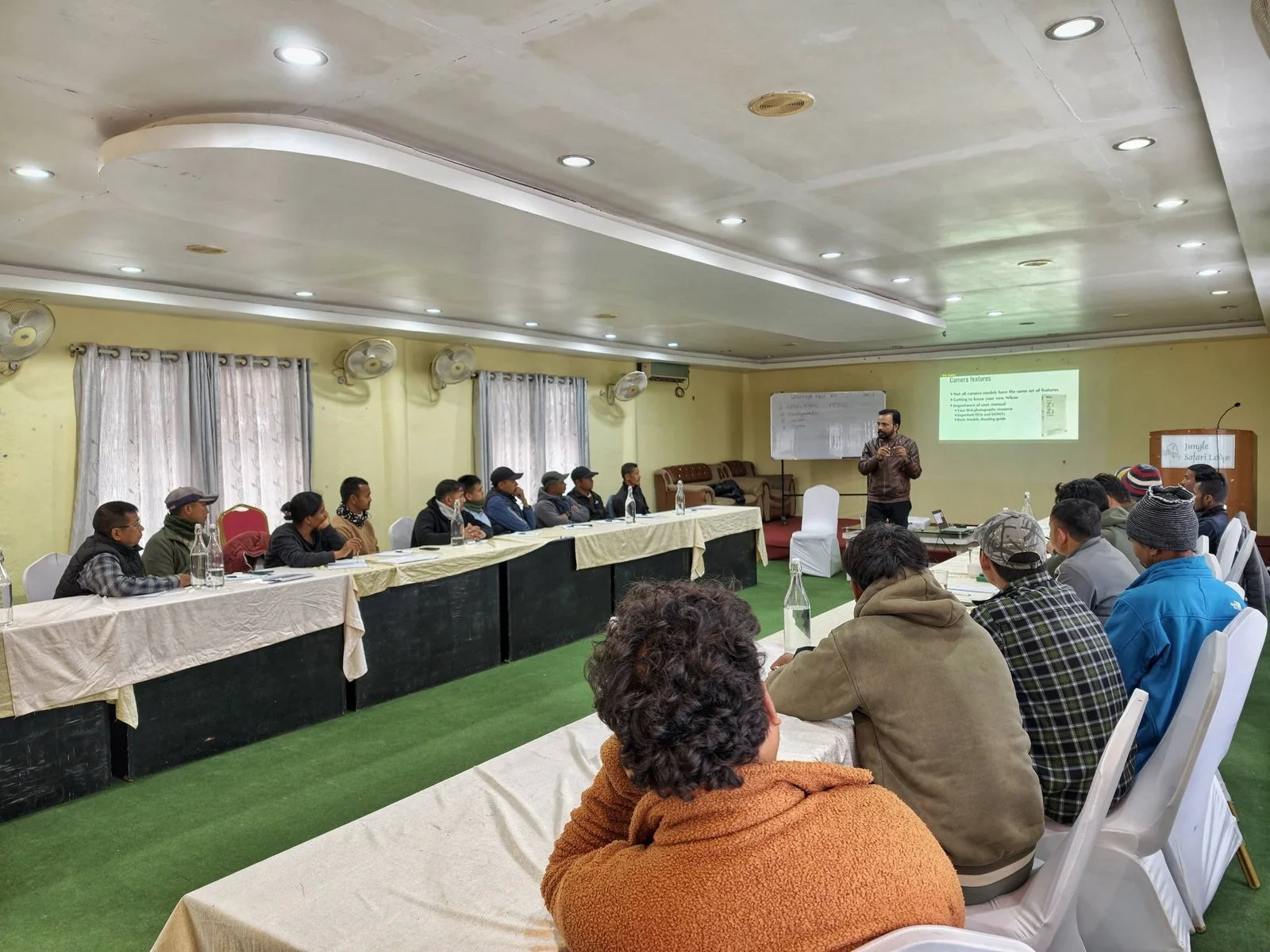
Training for wildlife guides from Sauraha in Chitwan
Travel was the hardest part, moving from east to west across Nepal by road is not easy. The distances are long and the road conditions are challenging. Flying was not an option most of the time, because of fog, flights were delayed or cancelled regularly. So, we travelled by road, for hours. It was tiring, but it was part of the work.
What stayed with me throughout this program was the importance of these guides. They are the frontline of conservation. They are the ones who explain wildlife to visitors, who shape behaviour in the field, who influence how people see and treat animals. If they are confident with a camera, if they understand ethics, and if they can tell honest visual stories, then conservation becomes stronger. This training was not just about photography, it was also about responsibility.
Working with these guides across Nepal was a privilege, it reminded me that conservation does not happen only in offices and reports. It happens on forest trails, on riverbanks, in grasslands, and in quiet conversations between people who care. And it starts with learning to see.
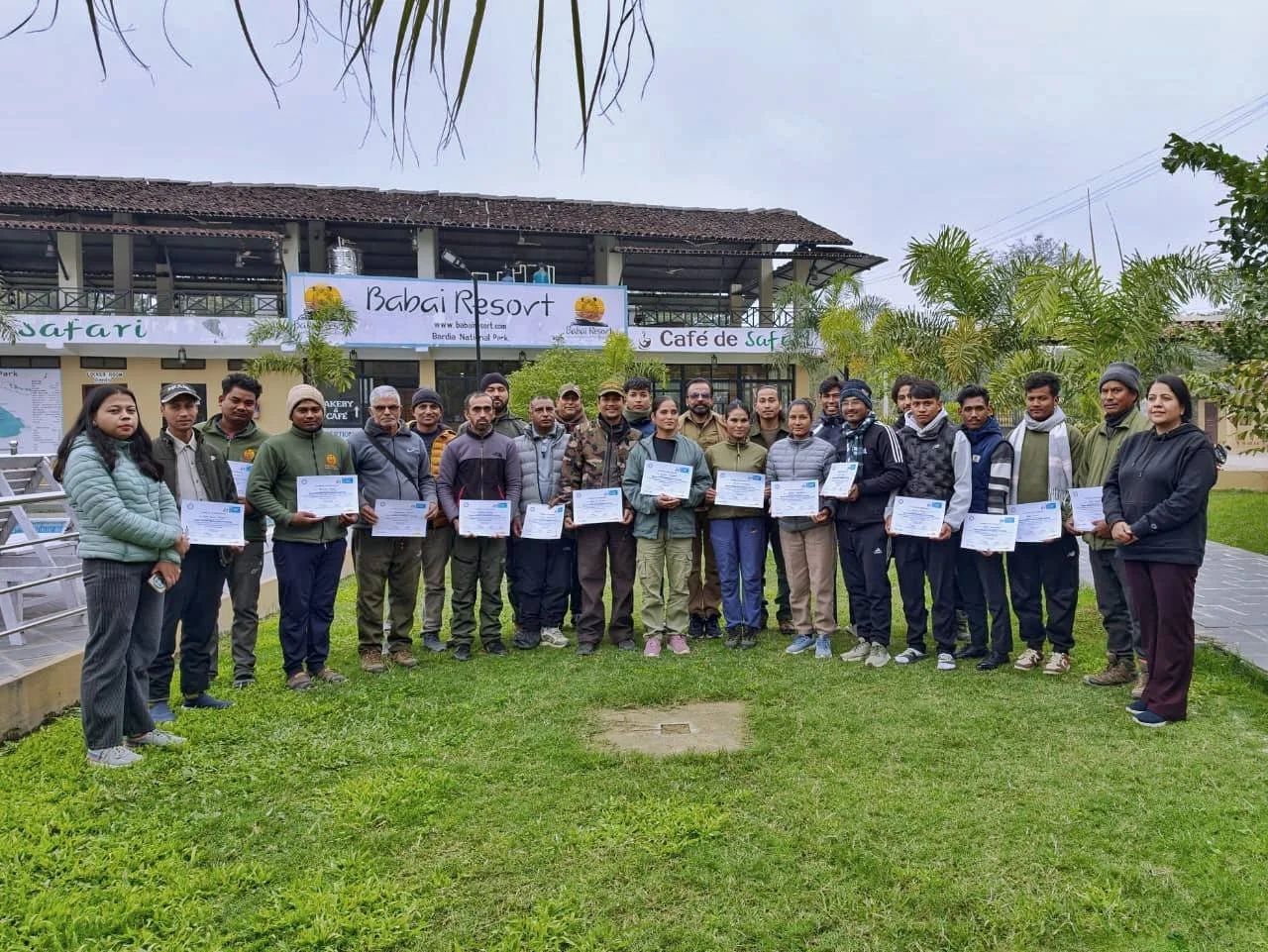
Group photo with training participants at Bardia
Beyond skills and techniques, this training was about strengthening the people who stand closest to wildlife every day. When guides understand photography, ethics, and storytelling, they become more effective educators, observers, and advocates. Their images help visitors see animals with respect, their behaviour in the field reduces pressure on wildlife, and their voices shape attitudes toward conservation. In that sense, every improved photograph is more than an image, it is a small step toward better protection, deeper awareness, and more responsible coexistence between people and nature.
