
The Photograph I Never Took: A Tiger Encounter in Bardia National Park
In May 2018, I was back in Bardia National Park with two photographer friends, all of us carrying the same quiet hope; a close, meaningful photograph of a Royal Bengal Tiger in the wild. We had booked three full days of jeep safari. The first day passed without a single sighting. On the second day, we were lucky enough to see a tiger emerge from the grass and sit in the river to cool off. We got some good photographs, but like all wildlife photographers, we wanted more: a closer frame, a clearer face, a stronger moment.
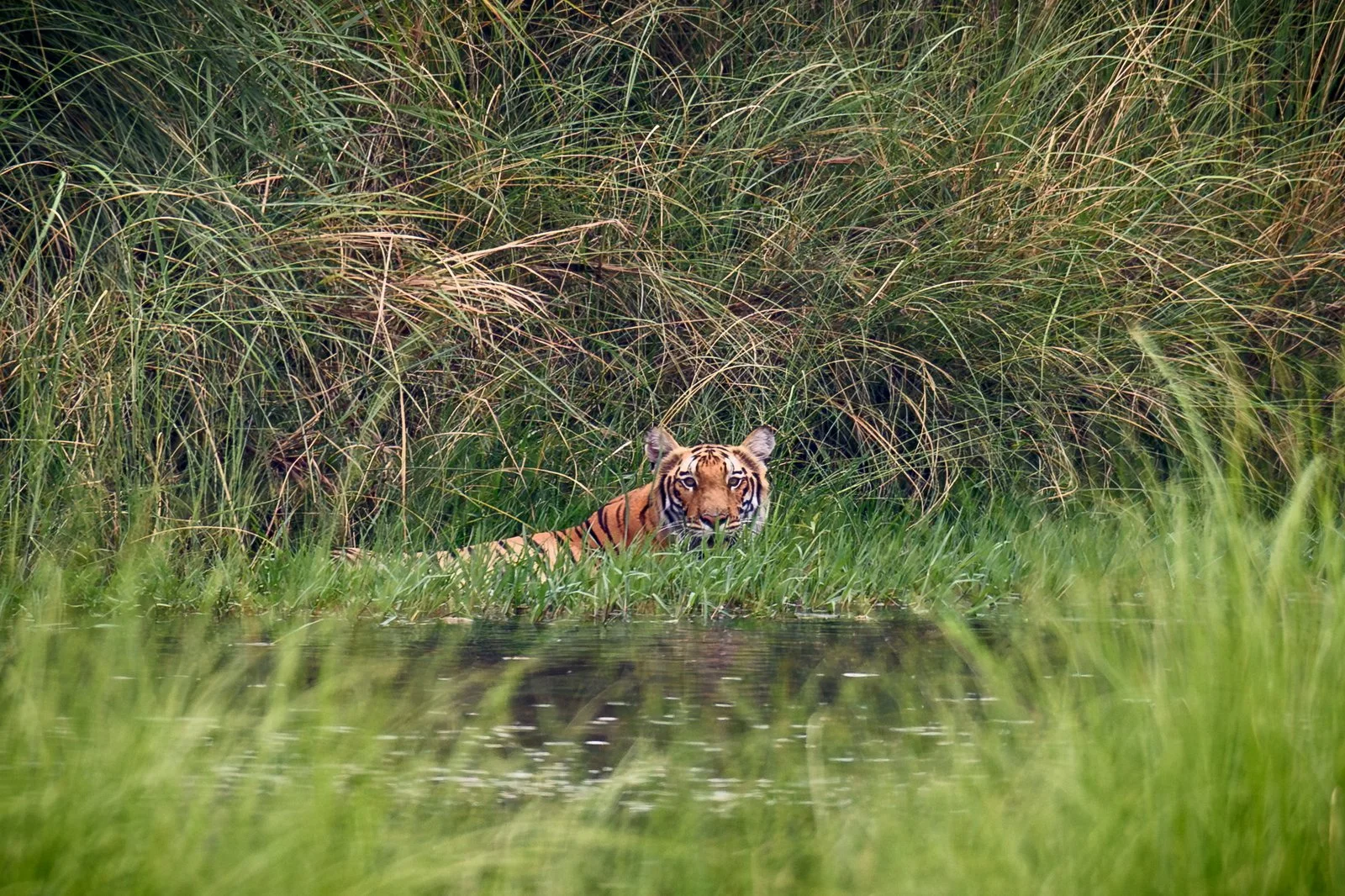
Bengal Tiger cooling off in Karnali river
The third day felt like our final chance. We spent the morning driving slowly through the forest, reading pugmarks, and listening for alarm calls. The jungle was quiet, no sign of movement, no sound of hope. By the time we stopped for lunch around 1:00 pm, we hadn’t seen anything. At around 2:00 pm, as we resumed our drive, everything changed.
About 300 meters ahead, a tiger crossed the road from left to right.
Our driver accelerated, but by the time we reached the crossing point, the tiger had moved about 50 meters into the grass. The grass was only two to three feet high, so we could still see its outline. Then, as soon as our vehicle stopped, the tiger noticed us and sat down.
And just like that, it disappeared.
Tigers are masters of camouflage. In seconds, the shape melted into the grass. For nearly two minutes, we scanned with binoculars and camera viewfinders until one of us spotted the small white patch on the back of its ear. That was all we could see. The tiger was sitting facing us, head hidden, watching.
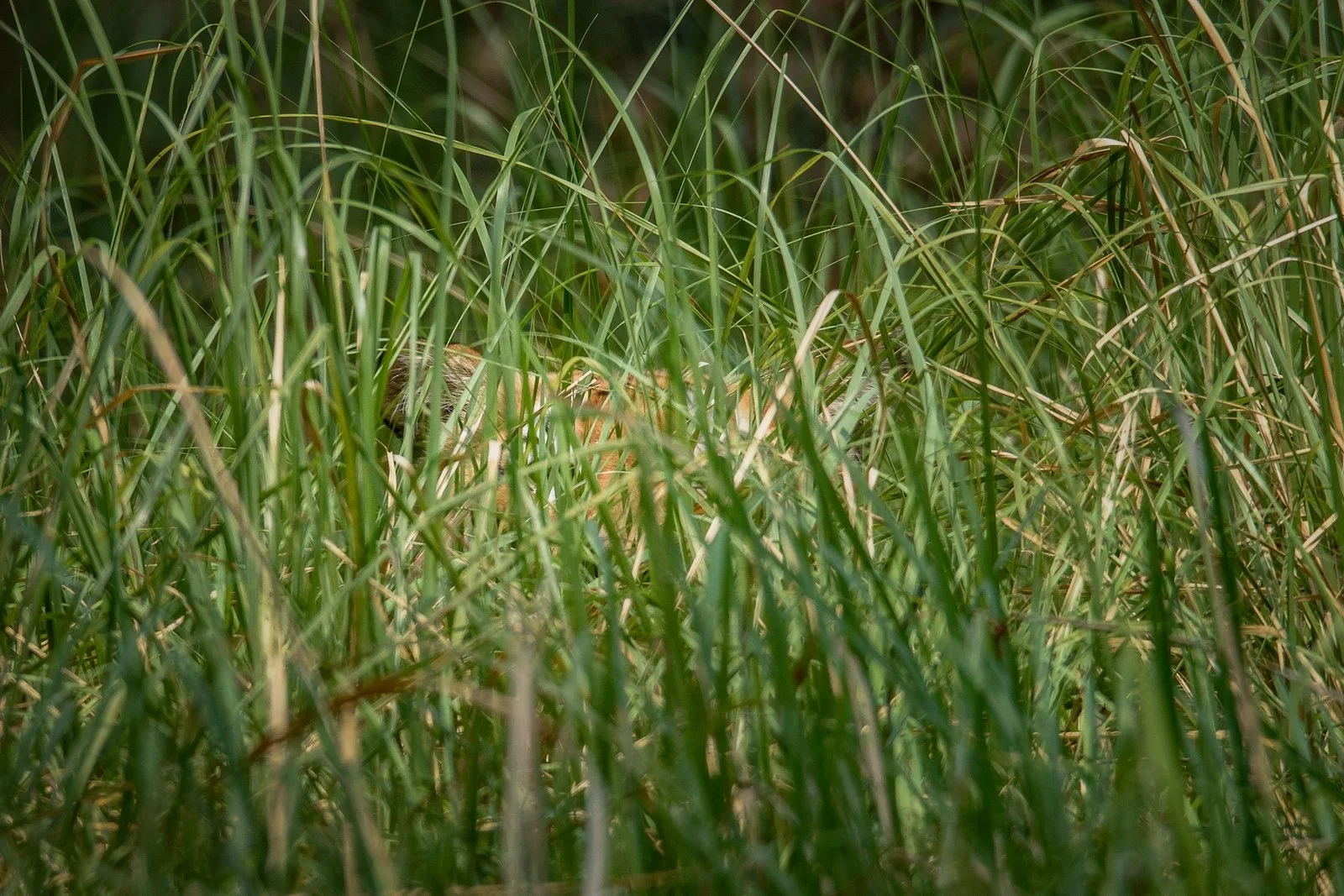
Bengal Tiger hiding among grasses, only its ear slightly visible
We all froze. Me, my two friends, the guide, and the driver. Not a single movement. The tiger knew where we were, and we knew where the tiger was. It became a silent standoff. Ten minutes passed. No sound, no movement.
Then the tiger slowly rose. First its back, then its torso, but it kept its head low, completely hidden in the grass. It began to walk parallel to the road, moving to the right. We asked the driver to reverse slowly, stopping the moment the tiger stopped or looked up. All three of us had our cameras raised, focus locked, fingers half-pressed, waiting for the face to appear.
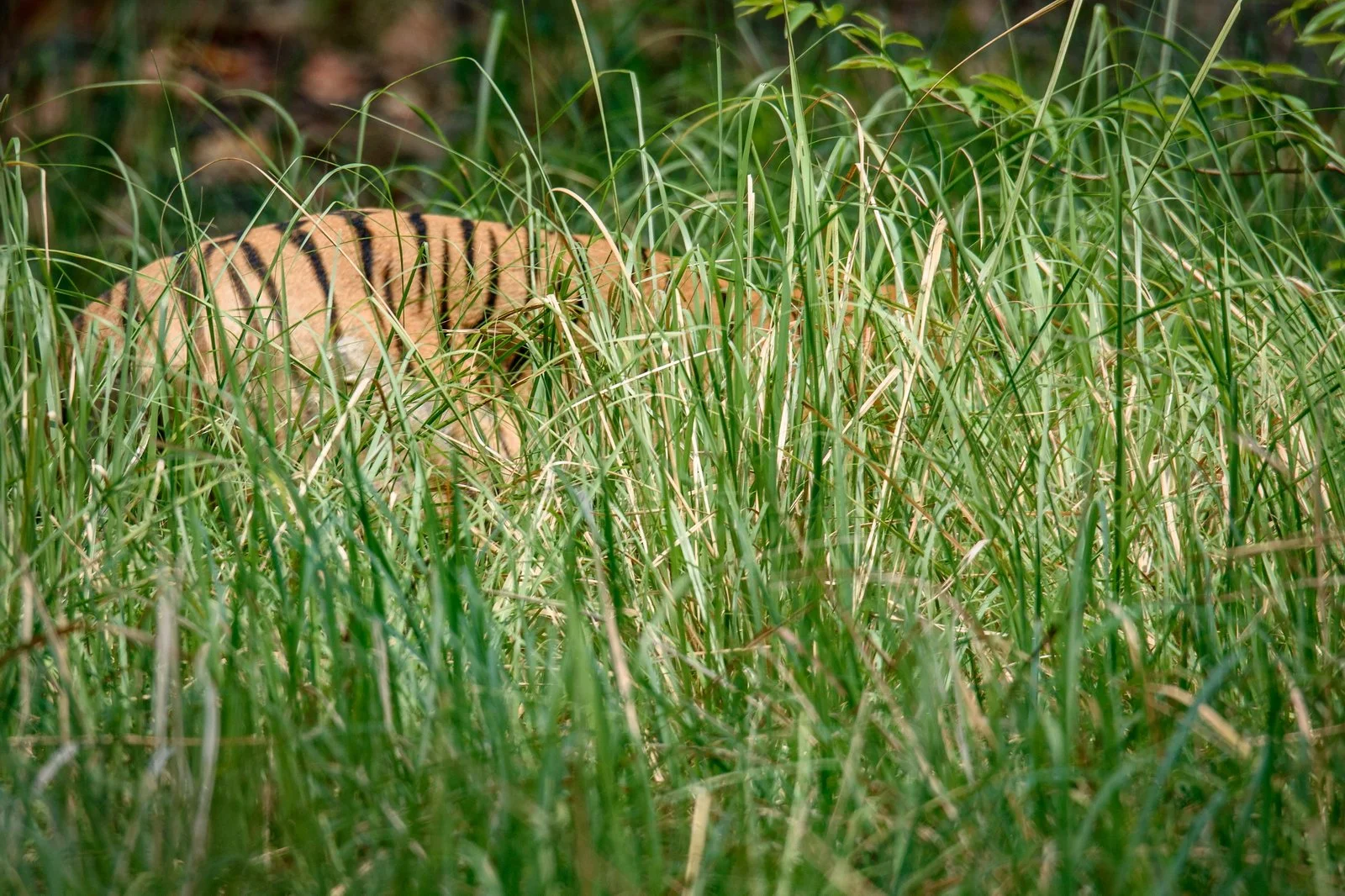
Bengal Tiger walking half hidden among grasses
For nearly 100 meters, we followed like this. The head never came up.
We took a few record shots of its body, knowing they would never be portfolio images. Then, without warning, the tiger turned away from us and headed toward the forest.
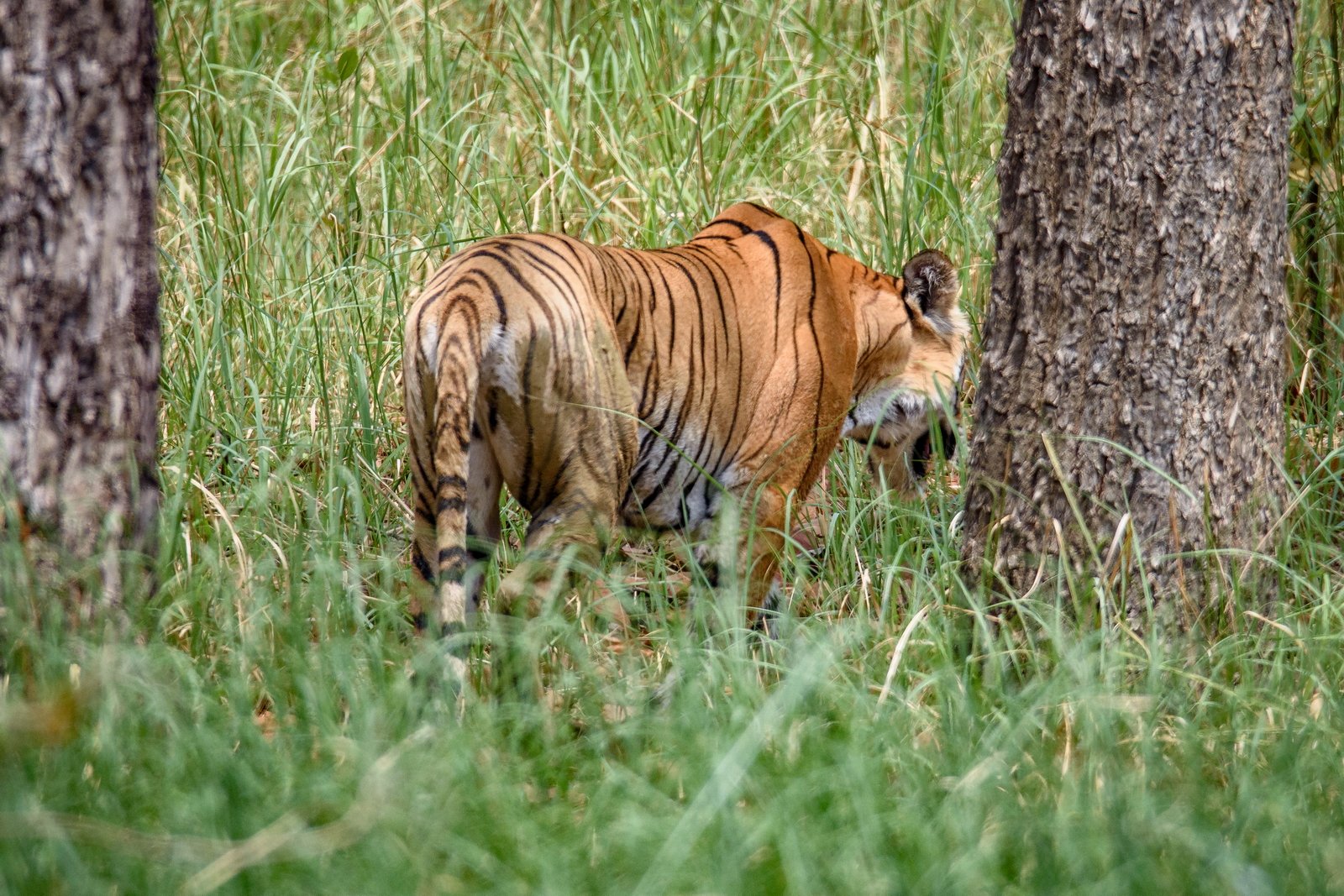
Tiger heading off towards the forest
With our park-authorised guide leading, we got out and followed on foot. We were careful, slow, and alert. At one point, the right eye became briefly visible through the grass, and I fired off a few frames. I also took a few shots of its back as it moved away, more as memory than expectation.
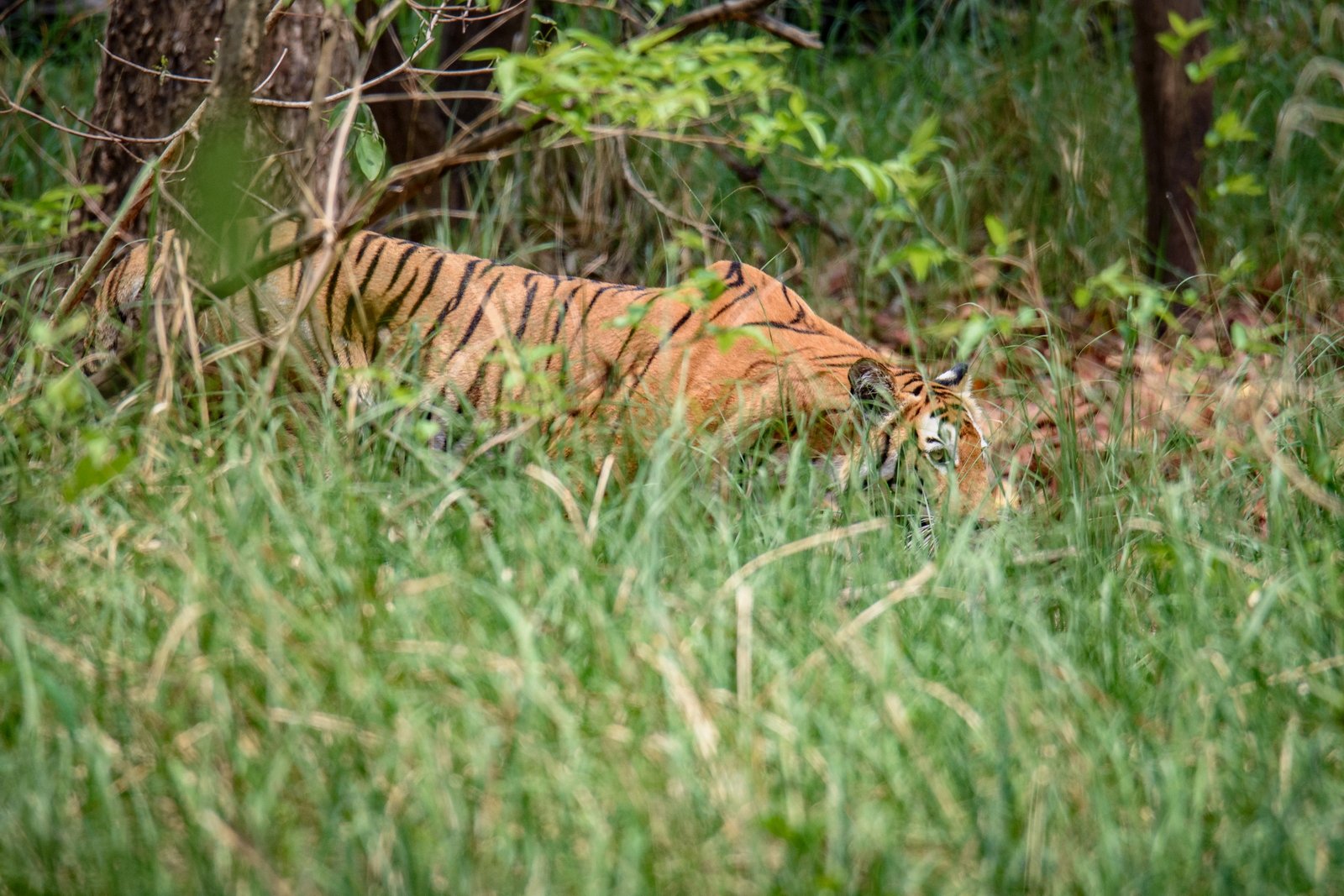
Tiger walking among grasses in Bardia national park
We followed for about 150–200 meters. Then the grassland ended and thick forest began. The tiger walked behind a tree and vanished into the bushes without even looking back.
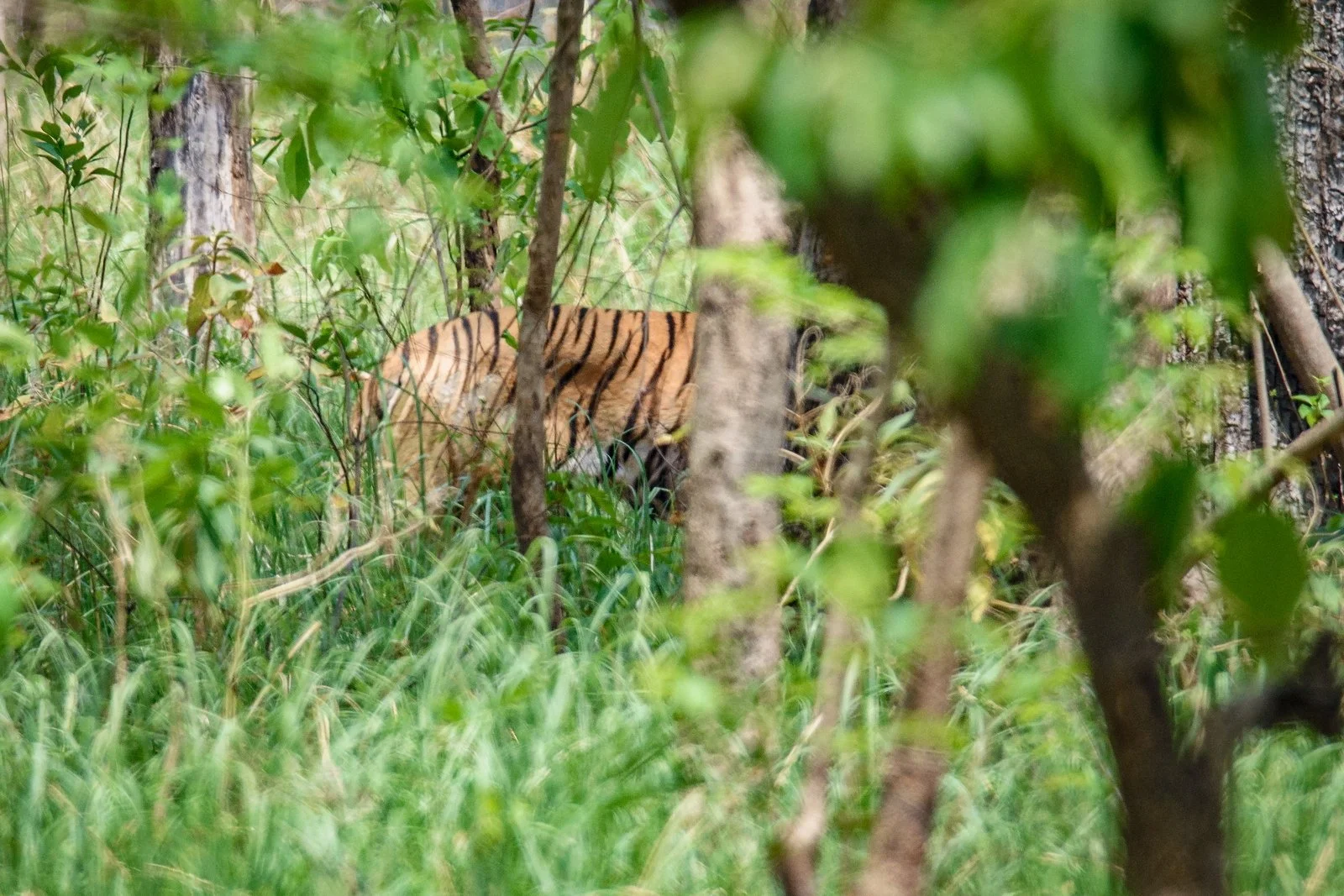
Tiger disappearing into the forest
That was the end.
It is not safe or ethical to follow a tiger into dense vegetation, so we turned back to the vehicle and drove on. We did not get the photograph we had come for. No full face, no eye contact, no dramatic frame.
But what we experienced was something no image could fully hold. The tension, the silence, the awareness that a wild tiger was watching us as closely as we were watching her. A lesson in patience, humility, and limits.
That day taught me something I still repeat often: wildlife does not owe us photographs. Nature does not perform on demand. Sometimes, the most powerful moment is the one you are allowed to witness, not the one you are allowed to take home.
When people ask me today what my favourite wildlife photograph is, my answer is always the same:
“My favourite photograph is the one that I missed during my last trip.”
Because that is the one that reminds me why respect comes before the shutter.
Experiences like this are important reminders that ethical wildlife photography is about restraint as much as it is about skill. Not every encounter should be pushed, and not every opportunity should be chased. Allowing a tiger to move freely, without pressure or disturbance, is part of respecting its space and its survival. Sometimes, choosing not to interfere is the most responsible decision a photographer can make. In the long run, that respect is worth far more than any photograph.
