
Chance Encounter with a Royal Bengal Tiger in Meghauli
On the evening of 14 November 2025, a friend working in conservation called me from Chitwan. He was travelling with a group of German visitors who had come all the way to Nepal hoping to see the Great One-horned Rhino in the wild. They had spent a full day on jeep safari inside Chitwan National Park, but tall elephant grass had made sightings difficult. They had returned empty-handed and a little disappointed. He asked me what they should do next.
By coincidence, I was in Meghauli at the time. I told him, half joking and half confident, to bring his friends over the next morning. Rhinos are common in the community forest there, and the grasslands are managed regularly. “I’ll introduce you to a few rhinos,” I said. “No problem.”
The next morning, 15 November, they arrived early. After completing the entry formalities, we drove into the community forest. Within five minutes, we encountered a large rhino feeding on water lettuce. Cameras came out immediately. Photographs, videos, quiet excitement. We watched the animal until it finished feeding and slowly disappeared back into the forest.
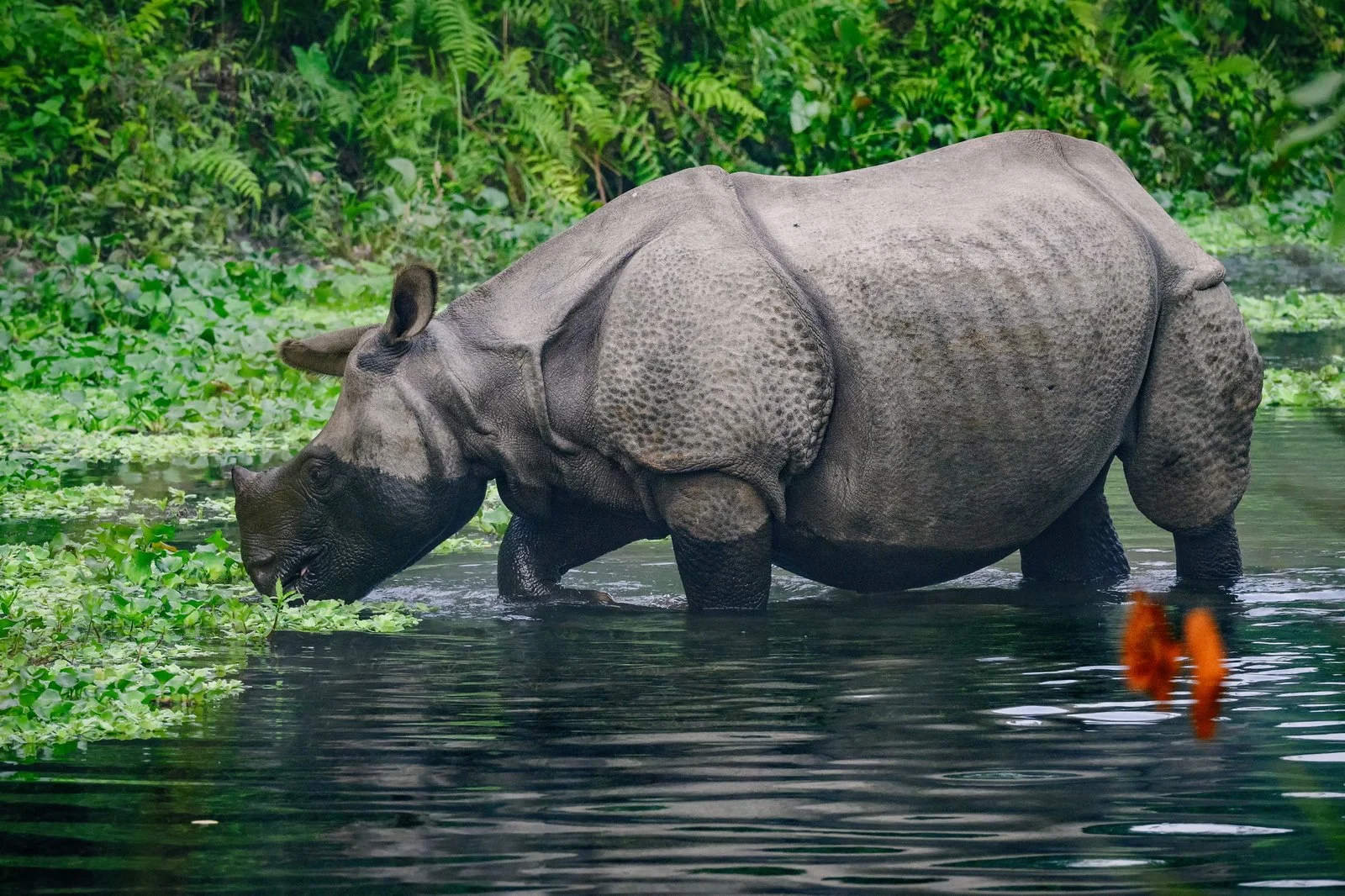
Great One-horned Rhino feeding on water lettuce
About ten minutes later, we came across a rhino mother with her calf. That sight alone would have been enough to make the trip worthwhile. Everyone was satisfied, ready to turn back. But it had been less than half an hour. I suggested we continue a little longer and see what else the forest had to offer.
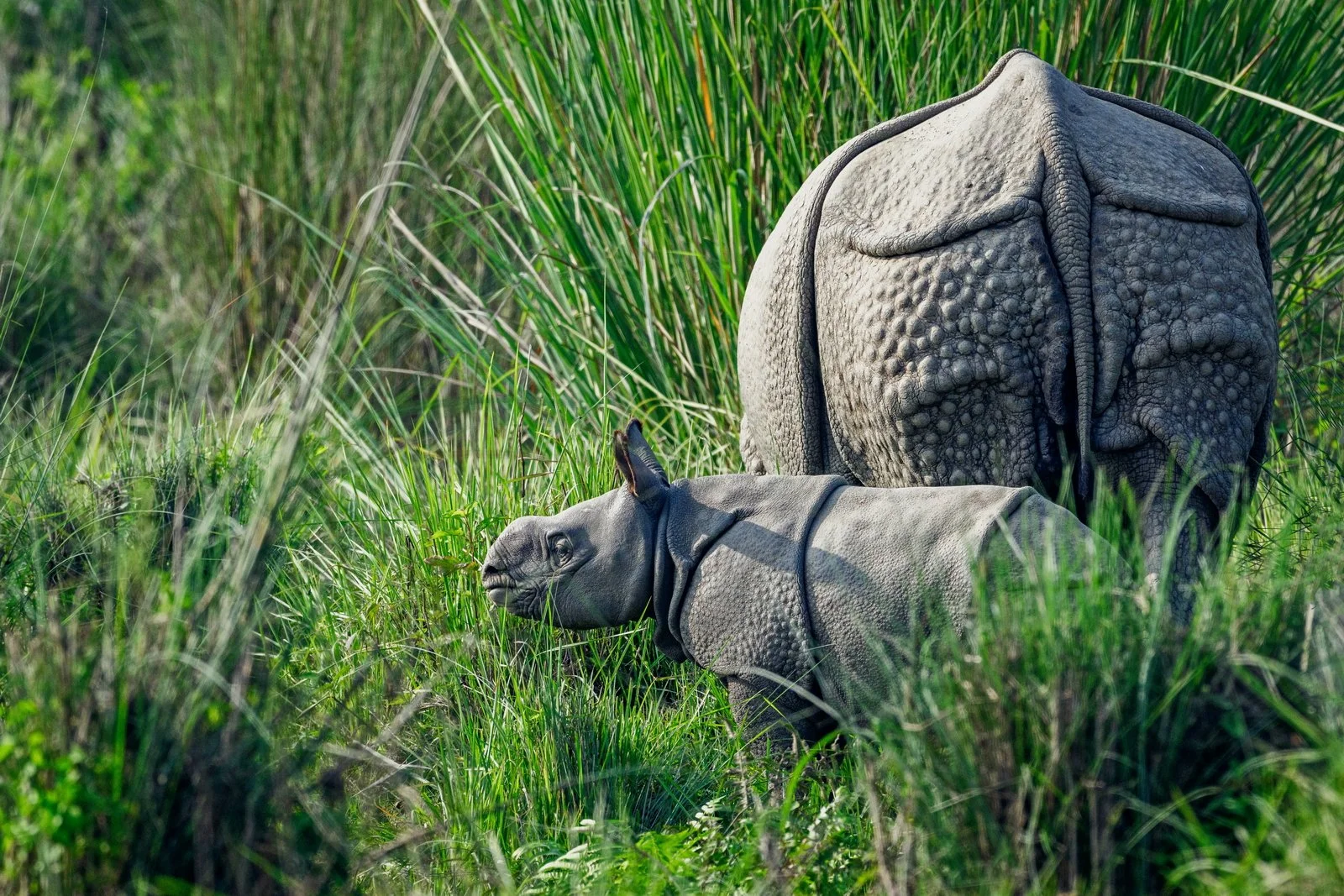
Great One-horned Rhino mother and calf
As we moved on, we saw spotted deer, a few hog deer, and peacocks moving through the undergrowth. We decided to drive toward the Rapti River to try our luck with gharials.
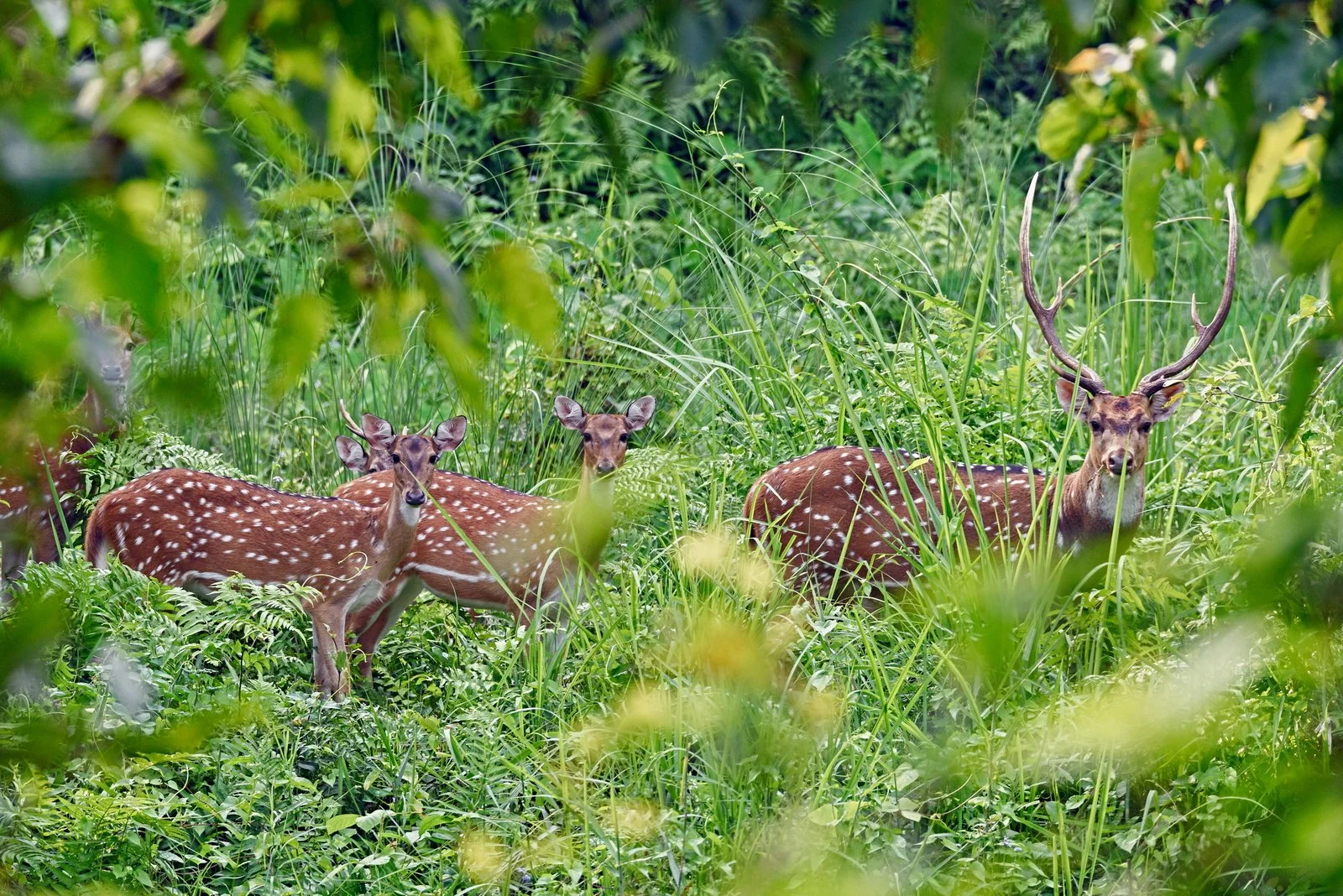
Spotted Deer Herd
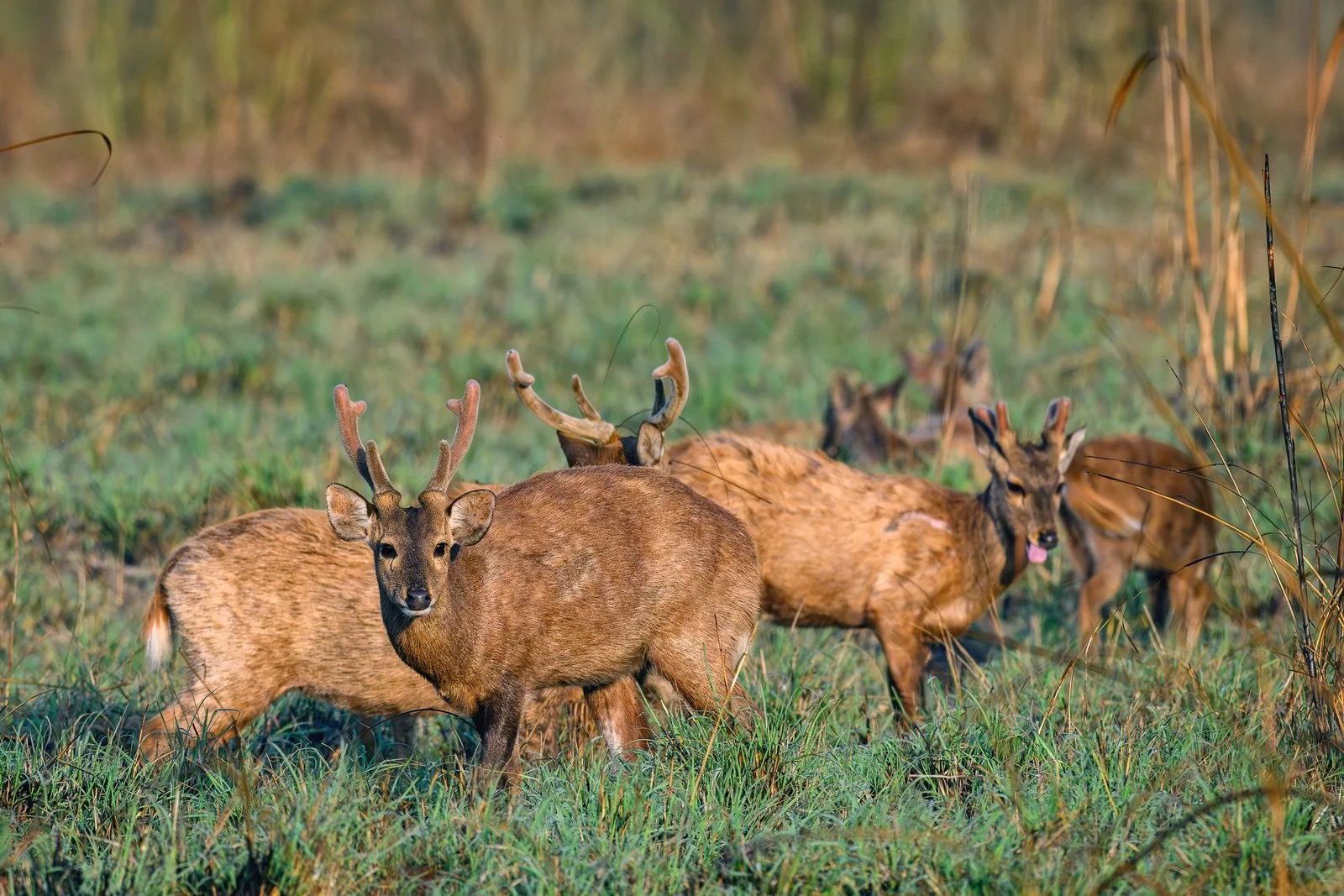
Hog Deer Herd
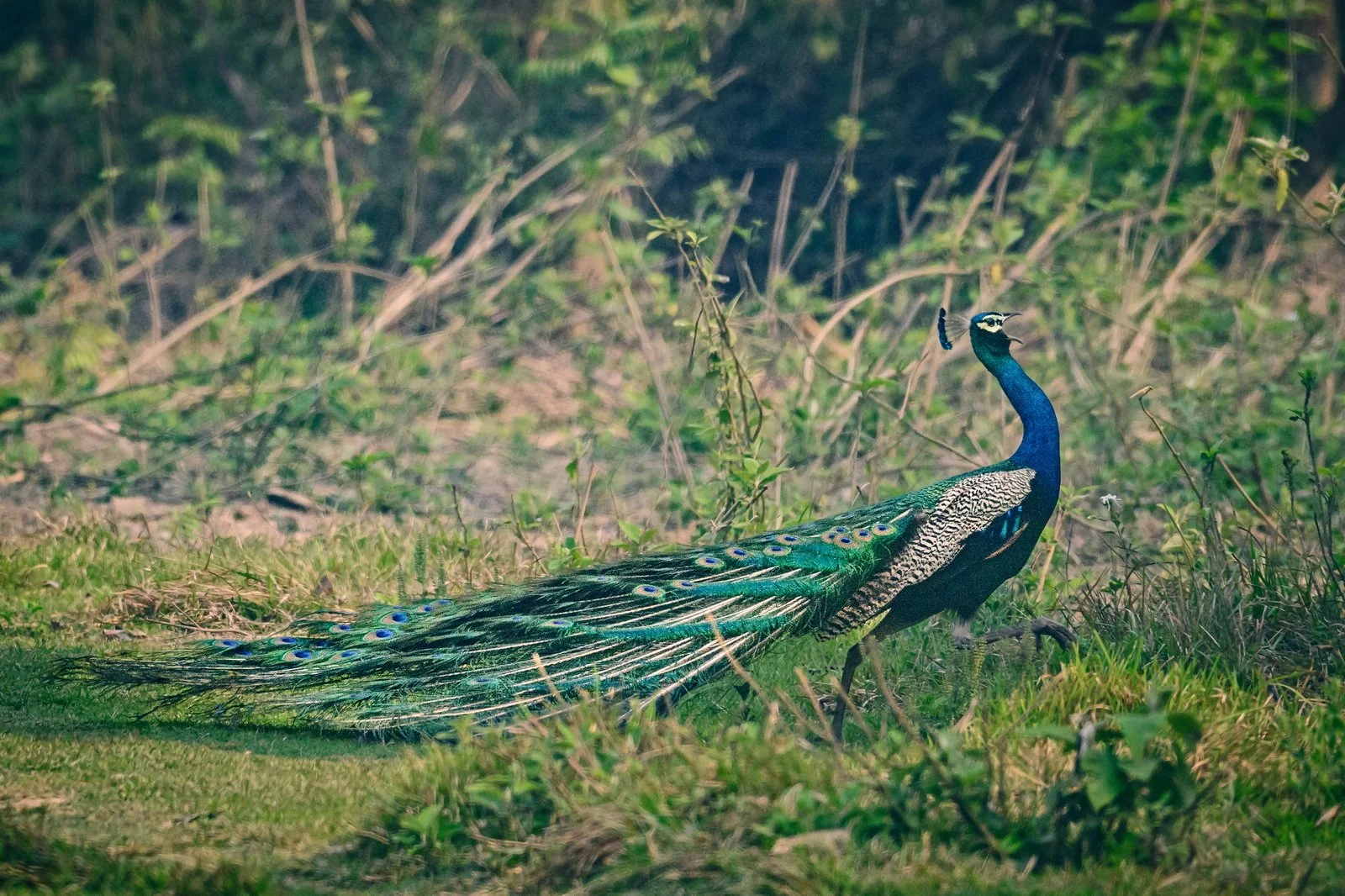
Peacock calling and moving through forest grassland
On the way, the forest path curved gently to the right. As we made that turn, about fifteen meters ahead of us, an adult female Royal Bengal Tiger was walking slowly along the same path. For a brief moment, nobody said a word. The forest seemed to hold its breath. Then our guide quietly raised his hand and pointed, his excitement clear even without a sound.
I lifted my camera and waited. I hoped she would turn and look back, even for a second. She did. Just briefly. I fired a short burst in continuous mode and managed only two frames with her eyes toward us.
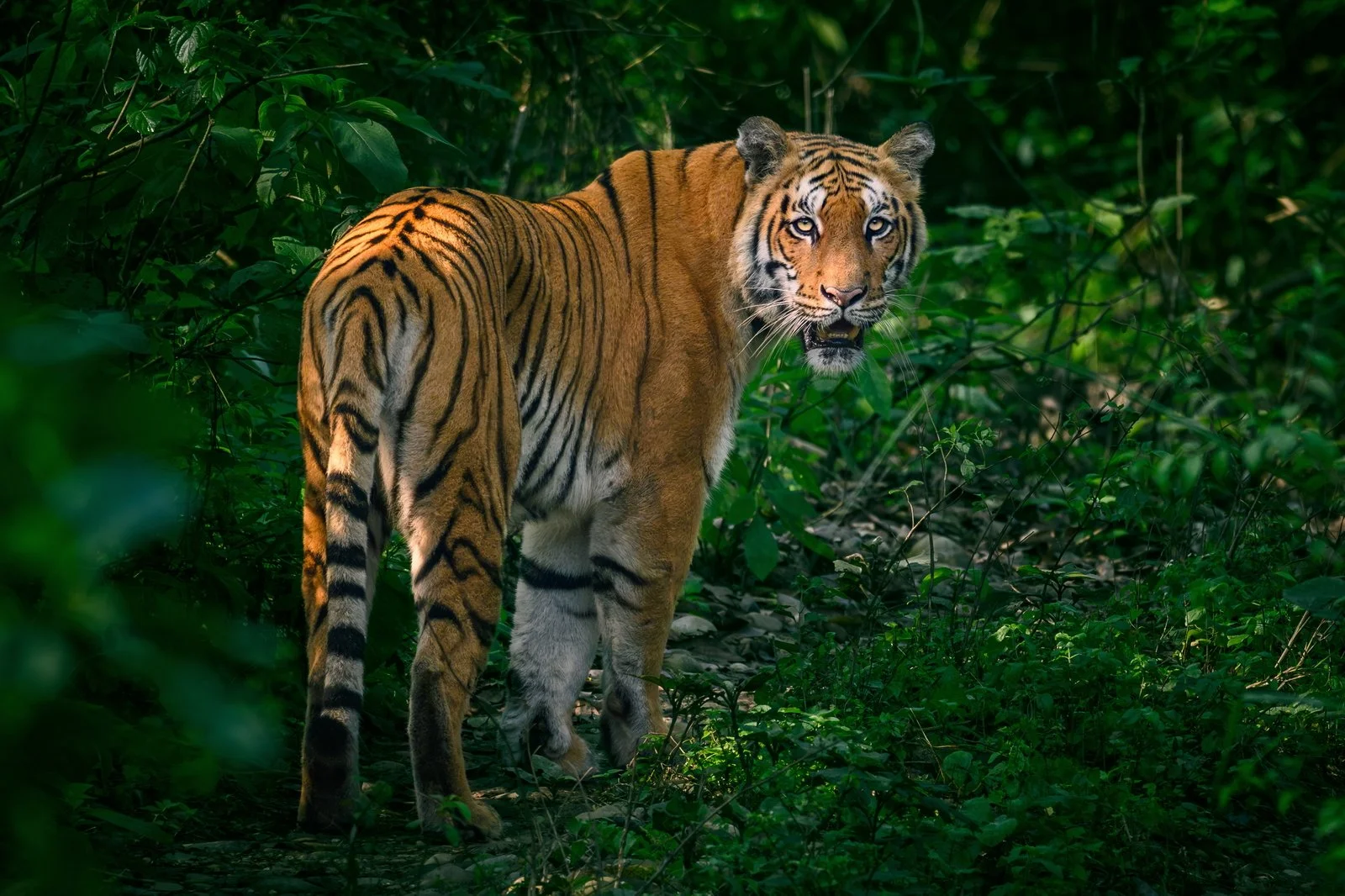
Royal Bengal Tiger looking back at the camera
That was enough. She turned away again, walked a few more meters, made a sharp left turn, and disappeared into the bush as silently as she had appeared.
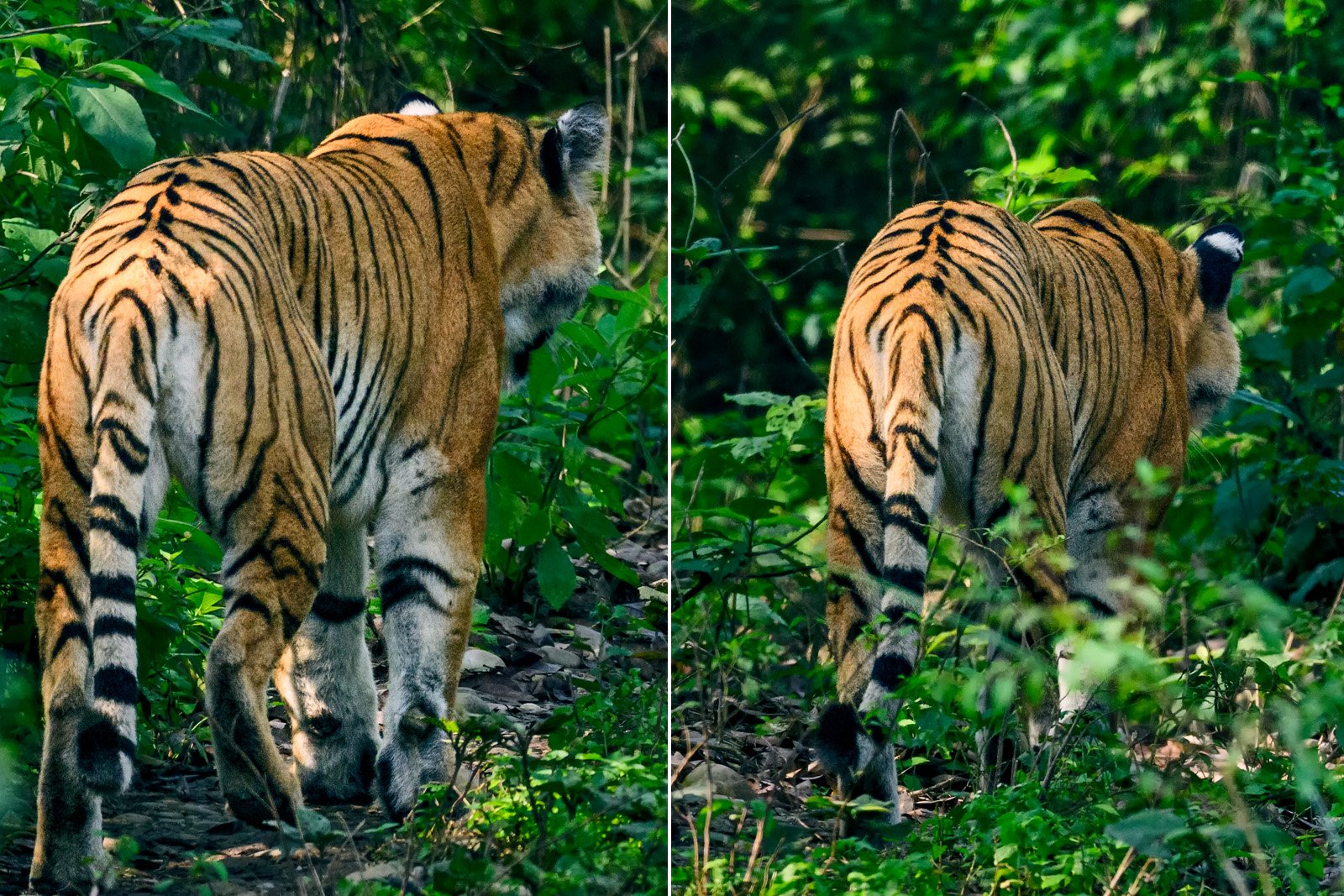
Royal Bengal Tiger walking away from us
Our hearts were pounding. The encounter had lasted only seconds, but the intensity stayed with us. We waited for a few minutes in case she reappeared. She did not.
We continued to the river. There were no gharials that day, but nobody seemed to care anymore. The tiger had overshadowed everything else.
We returned from the forest smiling, still replaying the moment in our minds, and ended the morning with cups of steaming hot coffee. What had begun as a simple attempt to show the visitors a rhino had turned into something entirely unexpected.
Encounters like this are reminders of how unpredictable and generous nature can be when given space. We went into the forest looking for rhinos, and the forest chose to show us a tiger instead. Moments like these reinforce an important lesson in conservation and ethical wildlife photography: we do not control the outcome. Our role is to move quietly, observe responsibly, and accept whatever the landscape offers. When wildlife is allowed to live without pressure or expectation, the experience itself becomes the reward. Sometimes, this reward is far greater than what you went looking for.
